การเทรดรายวัน (Day Trading)Day Trading
เทรดแบบเปิดและปิดภายในวันเดียวทำงานอย่างไร ต้องใช้เวลาเท่าไร วางกติกาเข้าออกอย่างไร และพังเพราะอะไรบ่อยที่สุดHow opening and closing trades within the same day works, the time it takes, typical entry and exit rules, and the usual ways it goes wrong.
ในบทความนี้ · 7
In this article · 7
การเทรดรายวัน (Day Trading) คือการเปิดและปิดไม้ภายในวันเดียว ไม่ถือข้ามคืน จุดเด่นคือไม่ต้องกังวลเรื่องราคากระโดดตอนตลาดเปิดสัปดาห์ใหม่ หรือค่าสวอป (Swap) ข้ามคืน แต่แลกมาด้วยการต้องมีเวลาหน้าจอในช่วงที่ตลาดคึกคัก และต้องเลือกไม้ให้ดีพอที่จะคุ้มต้นทุน บทความนี้อธิบายโครงสร้างของการเทรดรายวันแบบที่ทำได้จริง
เดย์เทรดคืออะไร
เดย์เทรดเดอร์มักถือไม้ตั้งแต่ไม่กี่สิบนาทีไปจนถึงหลายชั่วโมง ช้ากว่า สแกลป์ปิ้ง แต่เร็วกว่า สวิงเทรด กราฟที่ใช้บ่อยคือ M15 และ H1 สำหรับหาจุดเข้า และใช้ H4 หรือ D1 เพื่อดูภาพใหญ่ เป้าหมายต่อไม้มักอยู่ในระดับที่ราคาวิ่งได้ภายในหนึ่งช่วงตลาด (Session) เช่น 20–60 pip ใน EURUSD หรือ $5–$15 ในทองคำ ขึ้นกับความผันผวนของวันนั้น
ข้อดีที่ชัดคือทุกวันเริ่มใหม่ ไม่มีไม้ค้างให้คิดตอนนอน และความเสี่ยงจากข่าวช่วงกลางคืนหรือวันหยุดลดลง
เหมาะกับใคร
- เวลา: ต้องมีช่วงเวลาว่างต่อเนื่อง 2–4 ชั่วโมง ตรงกับช่วงตลาดที่ราคาวิ่ง สำหรับคนไทย ช่วงลอนดอน (บ่ายถึงเย็น) และนิวยอร์ก (ค่ำถึงดึก) คือช่วงหลัก ดู ช่วงเวลาตลาด
- นิสัย: อดทนรอจังหวะได้ ไม่ต้องมีไม้ทุกวัน และยอมปิดไม้ตอนสิ้นวันแม้ยังไม่ถึงเป้า
- ขนาดบัญชี: บัญชีตั้งแต่ไม่กี่ร้อยดอลลาร์เทรดได้ ถ้าคุมความเสี่ยงต่อไม้เป็นเปอร์เซ็นต์และใช้ล็อตเล็กพอ
- ต้นทุน: สำคัญรองจากสแกลป์ปิ้ง เพราะเป้าใหญ่กว่า แต่จำนวนไม้ยังเยอะพอที่ต้นทุนสะสมจะเห็นผล
กติกาแบบที่พบบ่อย
- เตรียมก่อนตลาดเปิด: มาร์กแนวรับแนวต้านจากกราฟ H4/D1 จุดสูงต่ำของวันก่อน และเช็กปฏิทินข่าวว่ามีข่าวแรงช่วงไหน
- กำหนดทิศทาง: ถ้ากราฟใหญ่เป็นขาขึ้น หาเฉพาะจังหวะซื้อ ถ้าออกข้างให้เล่นขอบกรอบ ถ้าไม่ชัดก็ไม่เทรด
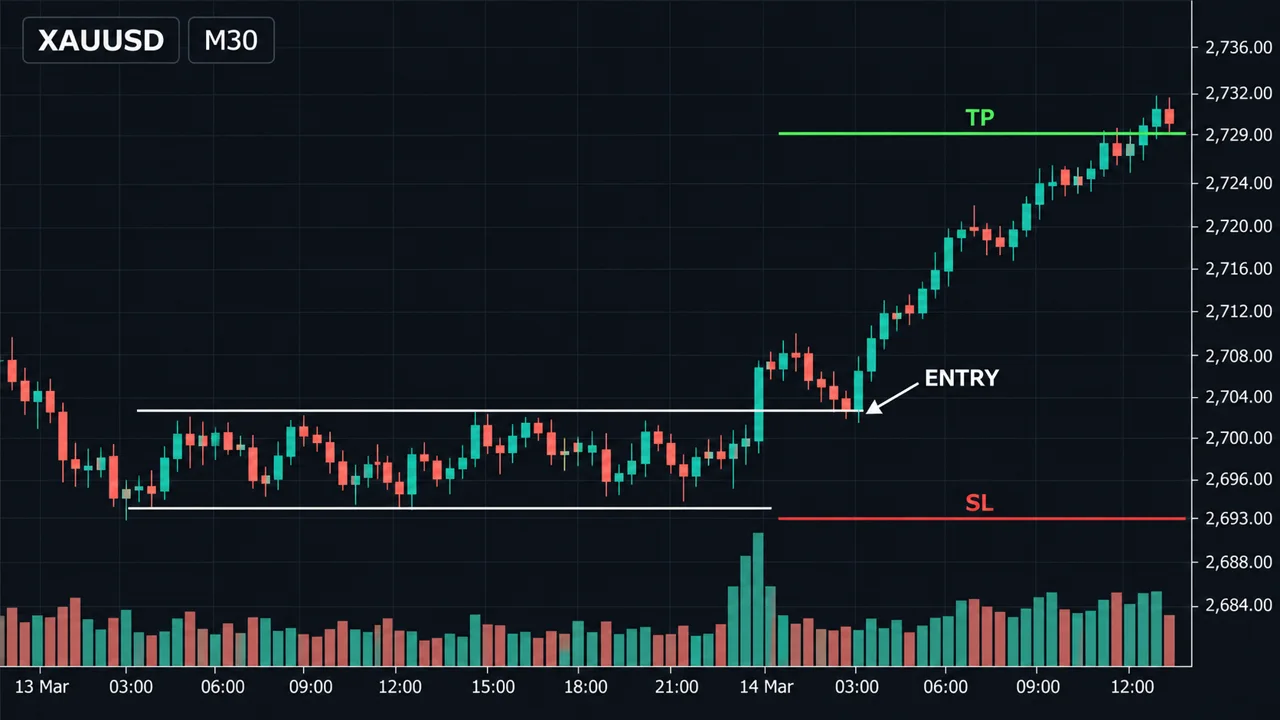
- จุดเข้า: รอสัญญาณบนกราฟ M15/H1 เช่น ราคาย่อมาที่แนวรับแล้วมีแท่งเทียนกลับตัว หรือเบรกกรอบเช้าแล้วกลับมาทดสอบ (เบรกแล้วรีเทสต์)
- จุดตัดขาดทุน: หลังจุดกลับตัวล่าสุด หรือใช้ระยะตามค่า ATR ของกราฟที่เข้า
- จุดออก: เป้าที่แนวถัดไป หรืออัตรากำไรต่อความเสี่ยงอย่างน้อย 1.5–2 เท่า และปิดทุกไม้ก่อนหมดช่วงที่ตั้งไว้
- ลิมิตรายวัน: กำหนดขาดทุนสูงสุดต่อวัน ถึงแล้วหยุด (ลิมิตรายวัน/รายสัปดาห์)
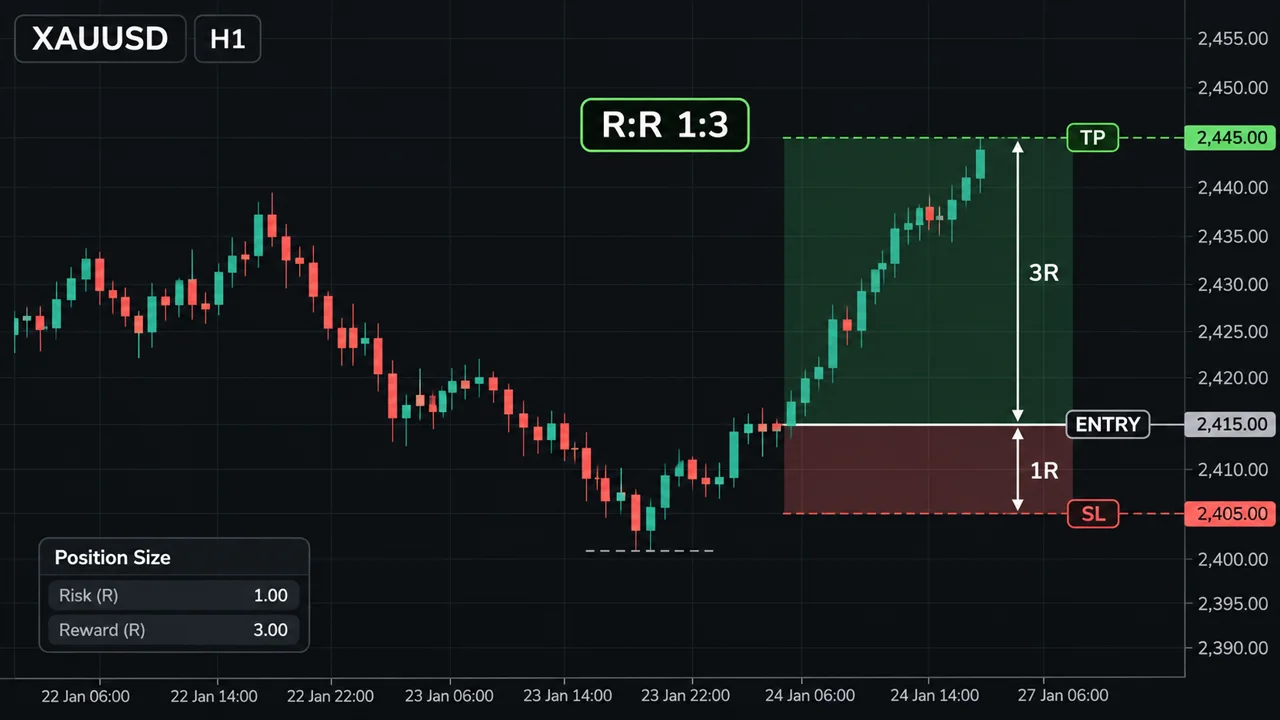
บัญชี $2,000 ยอมเสียต่อไม้ 1% = $20 เทรดทองคำ ซื้อที่แนวรับ ตั้ง SL ห่าง $4 ทอง 0.01 ล็อต ราคาขยับ $1 = $1 ดังนั้น ล็อต = $20 ÷ ($4 × $100 ต่อ 1 ล็อต) = 0.05 ล็อต เป้า $8 จากจุดเข้า (2 เท่าของ SL) ถ้าถึงเป้าได้ $8 × 5 = $40 ลิมิตขาดทุนต่อวัน 3% = $60 คือแพ้ได้ 3 ไม้แล้วหยุดวันนั้น สมมติว่าวันหนึ่งได้ 1 ไม้ เสีย 2 ไม้ ผลคือ $40 − $40 = $0 ก่อนหักต้นทุน แสดงว่าระบบแบบ 2:1 รับการแพ้มากกว่าชนะได้ แต่ต้นทุนจะทำให้ติดลบเล็กน้อย
ดูภาพด้านล่าง
วันไหนควรเทรด วันไหนควรพัก
เดย์เทรดพึ่งการเคลื่อนไหวภายในวัน วันที่ตลาดนิ่งมาก (เช่น ช่วงวันหยุดของตลาดใหญ่) ราคาอาจวิ่งไม่ถึงเป้า ในทางกลับกัน วันที่มีข่าวแรงอย่างการจ้างงานนอกภาคเกษตรของสหรัฐฯ (NFP) ราคาอาจกระชากทั้งสองทาง หลายคนจึงเลือกไม่ถือไม้ข้ามช่วงข่าวแรง หรือรอให้ราคานิ่งก่อน การดูช่วงราคาเฉลี่ยของวันย้อนหลังช่วยให้ตั้งเป้าที่สมจริงได้
จุดอ่อน / ข้อผิดพลาดที่พบบ่อย
- รู้สึกว่าต้องเทรดทุกวัน: การนั่งหน้าจอแล้วไม่ได้เทรดทำให้อึดอัด จึงบังคับเข้าไม้คุณภาพต่ำ ซึ่งเป็นรากของ การเทรดเกินตัว
- ปิดไม้ตอนสิ้นวันแบบไม่มีกติกา: บางคนถือไม้ขาดทุนข้ามคืน "เพราะเดี๋ยวก็กลับ" ซึ่งเปลี่ยนเดย์เทรดเป็นการถือไม้แบบไม่มีแผน
- ต้นทุนสะสม: 3–5 ไม้ต่อวัน × 20 วัน = 60–100 ไม้ต่อเดือน ต้นทุนรวมไม่น้อย ต้องรวมไว้ในการวัดผล
- ตั้งเป้าเกินช่วงราคาของวัน: ถ้าปกติทองวิ่งวันละ $20 การตั้งเป้า $25 จากจุดกลางวันมักไม่ถึง
- ขาดทุนติดแล้วเพิ่มล็อต: การแก้มือในวันเดียวกันคือสาเหตุหลักที่ทำให้วันแย่ ๆ กลายเป็นสัปดาห์แย่ ๆ
- ความเหนื่อยจากงานประจำ: หลายคนเทรดหลังเลิกงานตอนที่สมาธิเหลือน้อย ควรเลือกช่วงที่หัวยังโล่ง
จดว่าวันนี้จะเทรดที่ราคาแถวไหน ทิศไหน SL ที่เท่าไร และเลิกเมื่อไร ถ้าราคาไม่มาที่จุดที่วางไว้ ก็ไม่ต้องเทรด แผนที่เขียนไว้ก่อนช่วยกันการตัดสินใจตามอารมณ์ได้มาก
ใช้บนมือถือ
เดย์เทรดทำบนมือถือได้ดีกว่าสแกลป์ปิ้ง เพราะใช้กราฟ M15/H1 ที่อ่านบนจอเล็กได้ ตั้งเส้นแนวรับแนวต้านไว้ล่วงหน้าบนคอมหรือแท็บเล็ต แล้วใช้การแจ้งเตือนราคา (Price Alert) ให้มือถือเตือนเมื่อราคามาถึงโซน แทนการจ้องจอทั้งวัน เมื่อเข้าไม้แล้วใส่ SL/TP ทันทีในหน้าคำสั่ง
สรุป
- เดย์เทรดคือเปิดและปิดไม้ในวันเดียว ไม่มีความเสี่ยงข้ามคืน
- ต้องมีเวลาว่างต่อเนื่องตรงกับช่วงตลาดที่ราคาวิ่ง
- คำนวณล็อตจากเงินที่ยอมเสียต่อไม้ และตั้งลิมิตขาดทุนรายวัน
- ไม่ต้องเทรดทุกวัน วันที่ไม่มีจังหวะคือวันที่รักษาเงินไว้
- นับต้นทุนรวมทั้งเดือนเข้าไปในการวัดผลเสมอ
Day trading means opening and closing every trade within the same day — nothing is held overnight. The upside is that you never worry about weekend gaps or overnight swap. The trade-off is that you need screen time during active hours, and your trades have to be good enough to pay for their costs. This article lays out a realistic day-trading structure.
How day trading works
Day traders usually hold positions from tens of minutes to several hours — slower than scalping, faster than swing trading. Common charts are M15 and H1 for entries, with H4 or D1 for the bigger picture. Targets are usually sized to what price can travel within one session, for example 20–60 pips on EURUSD or $5–$15 on gold, depending on how volatile the day is.
The clear benefit is that every day starts fresh: no open positions to think about at night, and less exposure to overnight or weekend news.
Who it suits
- Time: you need a continuous 2–4 hour window that lines up with an active session. For traders in Thailand, London (afternoon to evening) and New York (evening to late night) are the main windows — see trading sessions.
- Temperament: able to wait for a setup, no need to trade every day, and willing to close at the end of the window even if the target was not reached.
- Account size: accounts from a few hundred dollars can work, as long as risk per trade is a percentage and lots are small enough.
- Costs: less critical than for scalping because targets are larger, but trade count is still high enough for costs to add up.
Typical rules
- Prepare before the session: mark support and resistance from H4/D1, the previous day's high and low, and check the calendar for high-impact news times.
- Decide direction: if the higher timeframe is rising, look only for buys; if it is ranging, trade the edges; if it is unclear, do not trade.
- Entry: wait for a signal on M15/H1 — for example a pullback to support with a reversal candle, or a break of the morning range followed by a retest (breakout and retest).
- Stop loss: beyond the latest swing, or a distance based on ATR of the entry chart.
- Exit: the next level, or a reward-to-risk of at least 1.5–2, and close everything before your window ends.
- Daily limit: a maximum loss per day; when it is hit, you stop (daily and weekly limits).
Account $2,000, risk 1% per trade = $20. Trade gold: buy at support with the stop $4 away. On gold, 0.01 lot = $1 per $1 move, so lot = $20 ÷ ($4 × $100 per 1.00 lot) = 0.05 lot. Target $8 from entry (twice the stop): a win pays $8 × 5 = $40. Daily loss limit 3% = $60, i.e. three losses and the day is over. Suppose one day brings one win and two losses: $40 − $40 = $0 before costs. A 2:1 plan can lose more often than it wins and still break even — but costs will push that day slightly negative.
See the charts below.
When to trade and when to sit out
Day trading depends on intraday movement. On very quiet days (for example around major market holidays) price may never reach a reasonable target. On days with high-impact releases such as US Non-Farm Payrolls (NFP), price can whip both ways, so many day traders avoid holding through the release or wait for things to settle. Looking at the average daily range over recent weeks helps you set targets that are realistic.
Weaknesses and common mistakes
- Feeling you must trade every day: sitting at the screen without a trade is uncomfortable, so low-quality entries get forced — the root of overtrading.
- No end-of-day rule: holding a losing trade overnight "because it will come back" turns a day trade into an unplanned position trade.
- Cost drag: 3–5 trades a day × 20 days = 60–100 trades a month. The total cost is real and must be part of your results.
- Targets bigger than the day's range: if gold typically moves about $20 a day, a $25 target from a mid-day entry rarely gets hit.
- Raising size after losses: same-day revenge trading is how a bad day becomes a bad week.
- Trading tired: many people trade after work when focus is low. Choose a window when your head is clear.
Note where you would trade today, in which direction, where the stop goes, and when you stop for the day. If price never comes to your level, there is no trade. A written plan blocks a lot of emotional decisions.
On a phone
Day trading works on a phone far better than scalping, because M15/H1 charts are readable on a small screen. Draw your levels on a computer or tablet in advance, then use price alerts so the phone notifies you when price reaches a zone instead of watching all day. Once in a trade, set the stop and target straight away in the order ticket.
Summary
- Day trading opens and closes positions within one day, with no overnight exposure.
- It needs a continuous time window that matches an active session.
- Size each trade from the amount you accept to lose, and set a daily loss limit.
- You do not need to trade every day; days without a setup are days you keep your money.
- Always include a full month of costs when you measure results.