เทรดถี่เกินไป (Overtrading) ต้นทุนที่มองไม่เห็นOvertrading — The Cost You Don't See
รู้ว่าเมื่อไหร่เรากำลังเทรดเยอะเกินไป ต้นทุนสเปรดและค่าคอมมิชชันกินพอร์ตแค่ไหน และวิธีจำกัดจำนวนไม้ให้เหลือแต่ไม้ที่ดีKnow when you are trading too much, how much spread and commission it really costs, and how to cap your trades to the good ones.
ในบทความนี้ · 7
In this article · 7
การเทรดถี่เกินไป (Overtrading) คือการเปิดไม้มากกว่าที่แผนหรือสภาพตลาดรองรับ อาจเป็นเพราะเบื่อ อยากมีส่วนร่วม อยากเอาคืน หรือเชื่อว่ายิ่งเทรดเยอะยิ่งได้เยอะ บนมือถือที่เปิดไม้ได้ทุกที่ทุกเวลา อาการนี้เกิดง่ายมาก และอันตรายเพราะต้นทุนของมันค่อย ๆ กินพอร์ตโดยที่เราไม่ค่อยรู้สึก
Overtrading มีกี่แบบ
- เทรดเพราะเบื่อ ตลาดนิ่ง ไม่มีจังหวะ แต่รู้สึกว่า "ต้องทำอะไรสักอย่าง"
- เทรดเพราะอารมณ์ หลังกำไรก็อยากได้อีก หลังขาดทุนก็อยากเอาคืน
- เทรดหลายตลาดพร้อมกัน เปิดทอง ยูโร ปอนด์ ดัชนี พร้อมกันโดยไม่มีเวลาวิเคราะห์จริงสักตัว
- ลดเกณฑ์ลงเรื่อย ๆ จากเดิมรอสัญญาณครบสามข้อ ก็เหลือสองข้อ แล้วเหลือแค่ "ดูน่าจะขึ้น"
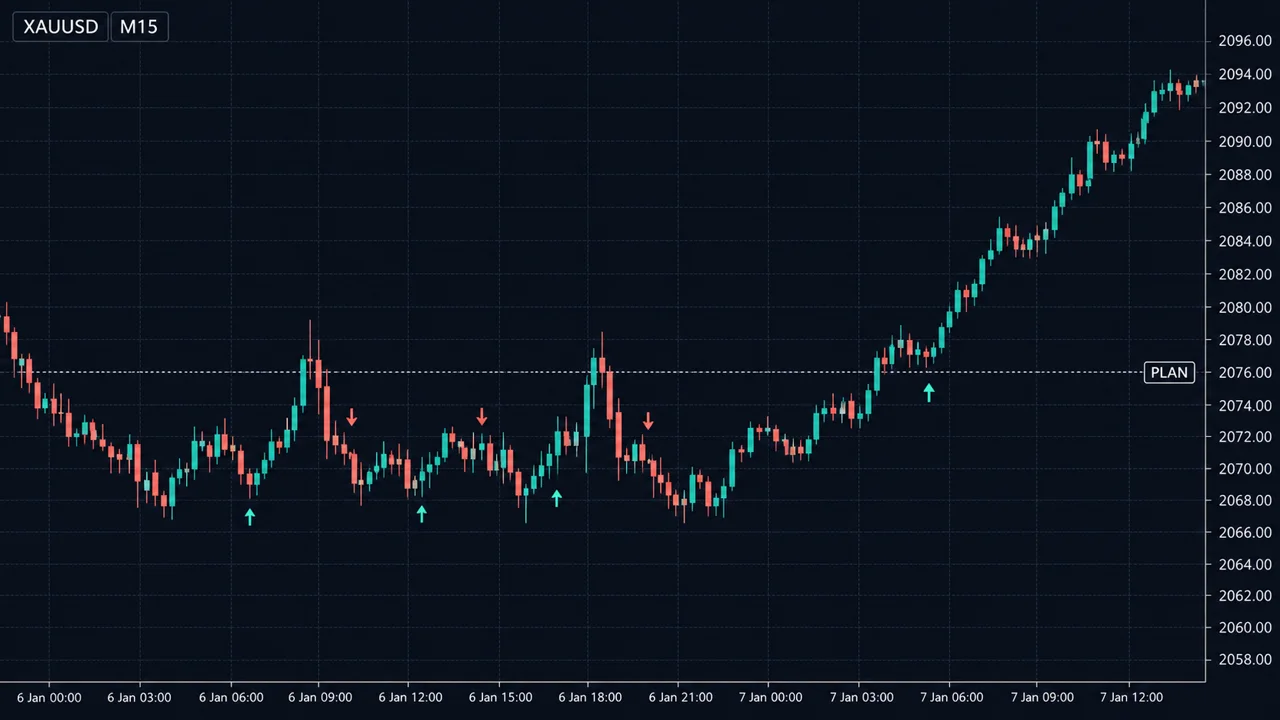
ดูภาพด้านล่าง ตลาดนิ่งแต่กดเข้าหลายไม้ ส่วนไม้ที่ตรงแผนจริงมีแค่ไม้เดียว
ต้นทุนที่มองไม่เห็น
ทุกไม้มีต้นทุนแน่นอนก่อนผลจะออก คือสเปรด (Spread) และบางบัญชีมีค่าคอมมิชชัน (Commission) ถ้าถือข้ามคืนยังมีค่าสวอป (Swap) ด้วย ดูรายละเอียดใน สเปรด สวอป และค่าคอมมิชชัน ต้นทุนเหล่านี้เล็กมากเมื่อมองทีละไม้ แต่เมื่อคูณด้วยจำนวนไม้ต่อวันและต่อเดือน มันอาจกลายเป็นตัวเลขที่ใหญ่กว่ากำไรที่ระบบทำได้
นอกจากเงินแล้ว Overtrading ยังมีต้นทุนด้านอื่น
- คุณภาพการตัดสินใจลดลง ยิ่งตัดสินใจมาก ยิ่งเหนื่อย ยิ่งพลาดง่าย
- บันทึกการเทรดไร้ความหมาย ไม้ดีปนกับไม้มั่ว จนไม่รู้ว่าระบบจริง ๆ ได้ผลแค่ไหน
- เวลาและการนอน การจ้องกราฟทั้งวันกระทบงาน ครอบครัว และสุขภาพ
สัญญาณเตือน
- จำนวนไม้ต่อวันมากกว่าที่แผนกำหนด
- เปิดไม้ในช่วงเวลาที่แผนบอกว่าไม่เทรด เช่น ตลาดเงียบหรือก่อนข่าวแรง
- ไม่สามารถอธิบายเหตุผลของไม้ได้ในหนึ่งประโยค
- ถือไม้ไม่ถึงไม่กี่นาทีแล้วปิด ทั้งที่ระบบเป็นแบบถือหลายชั่วโมง
- รู้สึกกระวนกระวายเมื่อไม่มีไม้เปิดอยู่
วิธีจำกัดการเทรดถี่เกินไป
- กำหนดจำนวนไม้สูงสุดต่อวัน เช่น 3 ไม้ ครบแล้วปิดแอป ไม่ว่าผลจะเป็นอย่างไร
- กำหนดช่วงเวลาเทรด เช่น เฉพาะช่วงตลาดลอนดอนเปิดถึงก่อนนิวยอร์กเปิด นอกเวลานี้ดูได้แต่ห้ามเข้า
- เช็กลิสต์เกรด A เขียนเงื่อนไขของไม้ที่ดีที่สุดของระบบ เข้าเฉพาะไม้ที่ครบ
- จำกัดจำนวนตลาด เลือก 1–3 ตัวที่เข้าใจจริง แทนการเทรดทุกอย่างที่ขยับ
- คำนวณต้นทุนรายเดือน ทุกสิ้นเดือน รวมสเปรด คอมมิชชัน และสวอปที่จ่ายไป แล้วเทียบกับกำไรขาดทุนสุทธิ
- หากิจกรรมแทน เมื่อเบื่อ ให้ทบทวนบันทึกหรือมาร์กโซนบนกราฟ แทนการกดเข้าไม้
สมมติพอร์ต $3,000 เทรด EURUSD ไม้ละ 0.10 ล็อต (1 pip = $1 ที่ 0.10 ล็อต) สเปรดเฉลี่ย 1.2 pip ต้นทุนต่อไม้คือ 1.2 × $1 = $1.20 25 ไม้ต่อวัน 25 × $1.20 = $30 ต่อวัน × 20 วันเทรด = $600 ต่อเดือน = 20% ของพอร์ต 3 ไม้ต่อวัน 3 × $1.20 = $3.60 ต่อวัน × 20 วัน = $72 ต่อเดือน = 2.4% ของพอร์ต ระบบที่เทรด 25 ไม้ต่อวันต้องทำกำไรก่อนหักต้นทุนเกิน 20% ต่อเดือนแค่เพื่อให้เสมอตัว ซึ่งเป็นเป้าที่สูงมาก ส่วนระบบ 3 ไม้ต่อวันมีภาระเริ่มต้นน้อยกว่าประมาณ 8 เท่า ตัวเลขนี้ยังไม่รวมค่าคอมมิชชันหรือสเปรดที่ถ่างตอนข่าว ซึ่งจะทำให้ส่วนต่างมากขึ้นอีก
ข้อผิดพลาดที่พบบ่อย
- คิดว่าเทรดเยอะ = ฝึกเยอะ การฝึกที่ดีคือทำไม้ที่ตรงแผนซ้ำ ๆ ไม่ใช่กดเยอะ ถ้าอยากฝึกจำนวนมาก ใช้บัญชีทดลองหรือการทดสอบย้อนหลังแทน
- เข้าใจผิดว่าสเกลป์ (Scalping) = Overtrading สเกลป์ที่มีแผนชัดและคิดต้นทุนแล้วไม่ใช่ปัญหา ปัญหาคือการเทรดถี่โดยไม่มีเกณฑ์
- ตั้งจำนวนไม้สูงสุดแต่นับเฉพาะไม้ที่ขาดทุน ทุกไม้นับหมด ทั้งบวกและลบ
- ลดเกณฑ์ในวันที่ตลาดเงียบ ตลาดเงียบคือข้อมูล ไม่ใช่ปัญหาที่ต้องแก้ด้วยการเทรด
ใช้บนมือถือ
ในแอป MT4/MT5 ดูประวัติ (History) แล้วกรองเป็นรายวันหรือรายสัปดาห์ จะเห็นจำนวนไม้และผลรวมได้ทันที ลองตั้งกฎว่าก่อนเปิดไม้ใหม่ ให้เปิดหน้าประวัติดูก่อนว่าวันนี้เทรดไปกี่ไม้แล้ว ขั้นตอนเล็ก ๆ นี้ช่วยดึงสติได้มาก
สรุป
- Overtrading คือการเทรดมากกว่าที่แผนหรือตลาดรองรับ
- ต้นทุนต่อไม้ดูเล็ก แต่รวมทั้งเดือนอาจใหญ่กว่ากำไรของระบบ
- จำกัดจำนวนไม้ ช่วงเวลา และจำนวนตลาด
- เข้าเฉพาะไม้ที่ผ่านเช็กลิสต์ครบ ตลาดเงียบไม่ใช่เหตุผลให้ลดเกณฑ์
Overtrading means opening more trades than your plan or the market conditions justify. The reasons vary: boredom, wanting to be involved, wanting to win back a loss, or believing that more trades mean more money. On a phone, where you can trade anywhere at any time, it is very easy to slip into — and dangerous, because its costs eat the account slowly and quietly.
Kinds of overtrading
- Boredom trading — the market is flat with no setups, but you feel you "have to do something."
- Emotional trading — after a win you want more; after a loss you want it back.
- Too many markets at once — gold, euro, pound and an index all open, with no real analysis on any of them.
- Lowering the bar — you used to wait for three conditions, then two, then just "looks like it's going up."
See the picture below: a flat market with many entries, and only one trade that truly fits the plan.
The cost you don't see
Every trade has a certain cost before the result is known: the spread, sometimes a commission, and a swap if held overnight. See spread, swap and commission. Per trade these look tiny, but multiplied by trades per day and per month they can become bigger than anything the method earns.
There are non-money costs too:
- Decision quality drops. The more decisions you make, the more tired you get and the more mistakes follow.
- Your journal stops meaning anything. Good trades mix with random ones, so you can no longer tell what your method really does.
- Time and sleep. Watching charts all day affects work, family and health.
Warning signs
- More trades per day than your plan allows.
- Trading at times your plan says not to, such as dead markets or just before major news.
- You cannot explain a trade's reason in one sentence.
- Closing after a couple of minutes when your method is meant to hold for hours.
- Feeling restless whenever you have no open position.
How to limit overtrading
- Set a maximum number of trades per day, for example three. When you reach it, close the app regardless of the result.
- Set trading hours, for example only from the London open to the New York open. Outside that window you may look but not enter.
- An A-grade checklist. Write down the conditions of your method's best setups and take only those.
- Limit your markets. Pick one to three you truly understand rather than trading everything that moves.
- Count your monthly costs. At month end, total the spread, commission and swap you paid and compare it with your net result.
- Have a replacement activity. When bored, review your journal or mark zones on the chart instead of opening a trade.
Suppose a $3,000 account trading EURUSD at 0.10 lots per trade (1 pip = $1 at 0.10 lots), with an average spread of 1.2 pips. The cost per trade is 1.2 × $1 = $1.20. 25 trades a day: 25 × $1.20 = $30 per day × 20 trading days = $600 a month = 20% of the account. 3 trades a day: 3 × $1.20 = $3.60 per day × 20 days = $72 a month = 2.4% of the account. The 25-a-day trader must make more than 20% a month before costs just to break even — a very high bar. The 3-a-day trader starts with a cost burden about eight times smaller. This still excludes commission and the wider spreads around news, which would widen the gap further.
Common mistakes
- "More trades = more practice." Good practice is repeating plan-quality trades, not pressing buttons. If you want volume, use a demo account or backtesting.
- Confusing scalping with overtrading. Scalping with a clear plan and costs accounted for is fine. The problem is frequent trading without criteria.
- Counting only losing trades toward the daily cap. Every trade counts, winners and losers.
- Lowering standards on quiet days. A quiet market is information, not a problem to fix by trading.
On a phone
In MT4/MT5 mobile, open History and filter by day or week to see the number of trades and the total result instantly. Make it a rule to open History before every new trade and check how many you have already taken today. That small step is a surprisingly strong brake.
Summary
- Overtrading is trading more than your plan or the market supports.
- Per-trade costs look small, but a month of them can exceed what the method earns.
- Cap your trades, your hours and your markets.
- Take only checklist-complete setups; a quiet market is no reason to lower the bar.