เบรกหลอก (False Breakouts) และวิธีรับมือFalse Breakouts and How to Handle Them
ทำไมการทะลุแนวรับแนวต้านจึงล้มเหลวบ่อย สังเกตสัญญาณเบรกหลอกอย่างไร ลดความเสียหาย และเทรดสวนอย่างมีกฎWhy breaks of support and resistance fail so often, how to spot a likely fake, how to limit the damage, and how some traders fade it with rules.
ในบทความนี้ · 7
In this article · 7
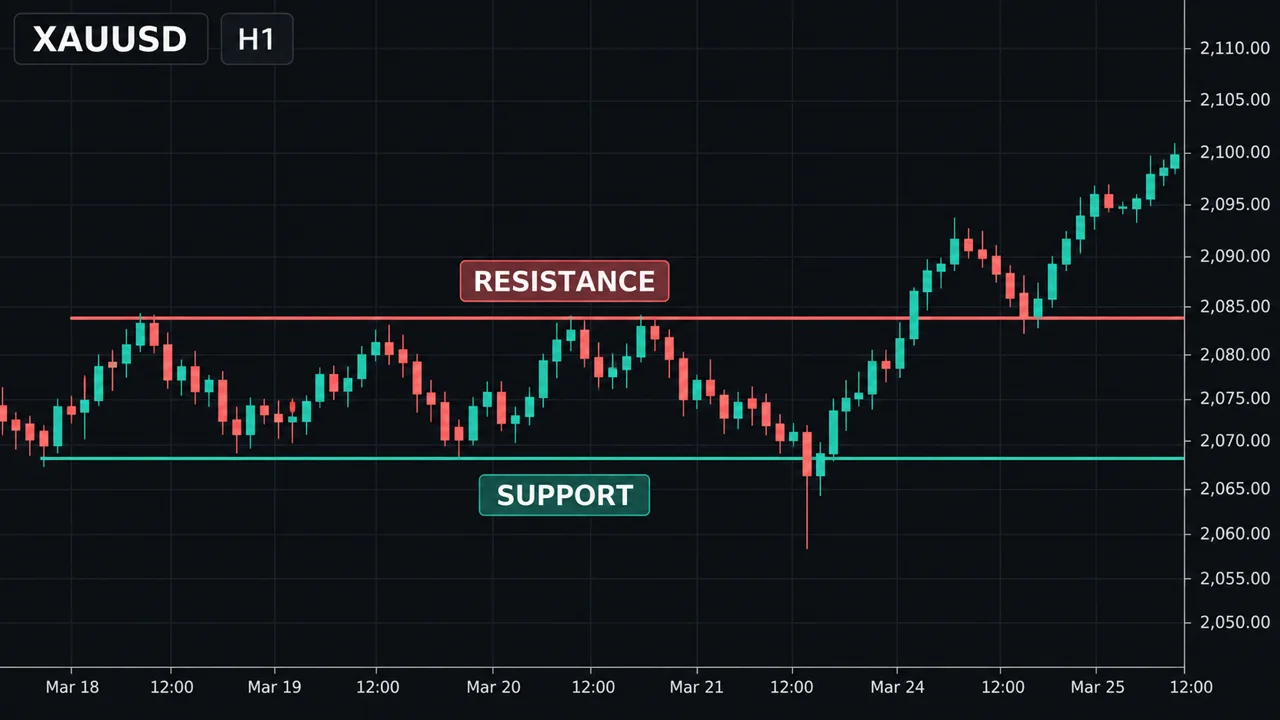
เบรกหลอก (False Breakout หรือ Fakeout) คือการที่ราคาทะลุแนวรับหรือแนวต้านออกไปชั่วครู่ แล้วกลับเข้ามาในกรอบเดิม ทำให้คนที่เข้าตามการเบรกติดขาดทุน และคนที่วาง SL ไว้หลังระดับโดนตัด นี่คือสิ่งที่เทรดเดอร์ Price Action เจอบ่อยที่สุด และเป็นต้นเหตุหลักของความหงุดหงิด การเข้าใจว่ามันเกิดขึ้นอย่างไรช่วยให้เสียเงินน้อยลง และบางคนใช้มันเป็นโอกาสเทรดสวน
ทำไมเบรกหลอกเกิดขึ้น
- สภาพคล่องกองอยู่หลังระดับที่เห็นชัด SL ของคนที่ขายที่แนวต้านอยู่เหนือแนวต้าน Buy Stop ของคนรอเบรกก็อยู่ตรงนั้น เมื่อราคาวิ่งไปถึง คำสั่งเหล่านี้ทำงานพร้อมกัน ทำให้ราคากระโดดชั่วครู่ ผู้เล่นรายใหญ่ที่ต้องการขายจำนวนมากอาจใช้จังหวะนี้ขายให้คนที่ซื้อเบรก ดูเพิ่มที่ สภาพคล่องและการล่าสต็อป
- ไม่มีแรงต่อ การทะลุเกิดจากคำสั่งจำนวนหนึ่งเท่านั้น เมื่อคำสั่งหมด ไม่มีคนซื้อเพิ่ม ราคาก็กลับ
- ช่วงตลาดเงียบ ตอนสภาพคล่องต่ำ คำสั่งเล็ก ๆ ก็ดันราคาให้ทะลุระดับได้
- ข่าวสะบัด ตัวเลขเศรษฐกิจออกมา ราคาสะบัดทะลุทั้งสองทางก่อนตัดสินทิศจริง
- สวนเทรนด์ใหญ่ การทะลุขึ้นในขาลงของไทม์เฟรมใหญ่มักไม่มีแรงหนุนพอ
สัญญาณที่การเบรกอาจไม่จริง
ไม่มีสัญญาณไหนแน่นอน แต่สิ่งเหล่านี้ทำให้ควรระวังมากขึ้น
- แท่งเบรกปิดกลับเข้ามา ไส้ยาวเลยระดับแต่ตัวเทียนปิดอยู่ในกรอบ นี่คือสัญญาณที่ชัดที่สุด
- ทะลุไม่ไกล ปิดเลยระดับไปนิดเดียว แล้วแท่งต่อไปไม่ไปต่อ
- แท่งเบรกเล็ก ขนาดพอ ๆ กับแท่งปกติหรือเล็กกว่า ไม่แสดงแรงพิเศษ
- เกิดในช่วงเวลาสภาพคล่องต่ำ เช่น ช่วงก่อนตลาดยุโรปเปิดสำหรับคู่เงินหลัก
- ระดับถูกทดสอบซ้ำ ๆ จนเห็นชัดเกินไป ทุกคนวาง SL ที่เดียวกัน
- สวนทิศโครงสร้างไทม์เฟรมใหญ่ ดู โครงสร้างราคา
รับมือกับเบรกหลอกในฐานะคนเทรดเบรก
- รอแท่งปิด ไม่เข้าตอนแท่งยังวิ่ง ลดการโดนไส้หลอกได้มาก
- รอรีเทสต์ ดู เบรกแล้วรีเทสต์ ถ้าราคากลับเข้ากรอบแทนที่จะยืนเหนือระดับ คุณไม่ได้เข้าเลย
- วาง SL ไม่ชิดระดับเกินไป ให้เผื่อระยะตามความผันผวน เช่น ใช้ส่วนหนึ่งของ ATR ดู ATR
- ออกเร็วเมื่อราคาปิดกลับเข้ากรอบ ไม่ต้องรอ SL ถ้าเหตุผลของการเบรกหายไปแล้ว
เทรดสวนเบรกหลอก (Fading)
บางคนตั้งกลยุทธ์ไว้เทรดสวนโดยตรง กฎตัวอย่าง
- มีกรอบหรือระดับที่ชัดบนไทม์เฟรมใหญ่
- ราคาทะลุออกไป แต่แท่งปิดกลับเข้ามาในกรอบ
- เข้าสวนทิศการทะลุ SL เลยปลายไส้ของการทะลุออกไปเล็กน้อย
- เป้าแรกกลางกรอบ เป้าสองขอบฝั่งตรงข้าม
สมมติทองแกว่งในกรอบ 1,980–2,000 บน H1 มาหลายวัน แท่งหนึ่งวิ่งขึ้นไปถึง 2,004 แต่ปิดกลับลงมาที่ 1,996 คนไล่ซื้อเบรก ซื้อที่ 2,002 SL 1,995 = 7 ดอลลาร์ ที่ 0.03 ล็อต ขาดทุน 0.03 × 7 × 100 = $21 คนเทรดสวน ขายที่ 1,995 SL เหนือปลายไส้ 2 ดอลลาร์ = 2,006 ระยะ 11 ดอลลาร์ ที่ 0.03 ล็อต ความเสี่ยง 0.03 × 11 × 100 = $33 (บัญชี $2,000 = 1.65%) เป้าแรกกลางกรอบ 1,990 = 5 ดอลลาร์ → $15 เป้าสองใกล้ขอบล่าง 1,982 = 13 ดอลลาร์ → $39 สังเกตว่า RR ถึงเป้าสองแค่ประมาณ 1.18 การเทรดสวนจึงต้องการอัตราชนะที่สูงพอจะคุ้ม และถ้าราคากลับขึ้นไปทะลุจริง การเทรดสวนจะแพ้
ดูภาพด้านล่าง ตัวอย่างนี้วาดเป็นกราฟ และเทียบเงินเสี่ยงกับเป้า
จุดอ่อน / ข้อผิดพลาดที่พบบ่อย
- ทุกการเบรกไม่ใช่การหลอก ถ้าเทรดสวนทุกครั้ง คุณจะยืนขวางเทรนด์ใหม่ที่เพิ่งเริ่ม และนั่นคือการขาดทุนที่ใหญ่ที่สุด
- เบรกหลอกตัดสินได้หลังเกิดแล้ว บนกราฟย้อนหลังดูชัด แต่ตอนแท่งยังวิ่ง คุณไม่รู้ว่าจะปิดตรงไหน
- เบรกหลอกซ้อนเบรกหลอก ราคาทะลุ กลับเข้ากรอบ แล้วทะลุใหม่จริง คนที่เทรดสวนโดน SL
- RR ของการเทรดสวนมักไม่สูง เพราะ SL ต้องเลยไส้ ส่วนเป้าคือกรอบเดิม
- ใช้เบรกหลอกเป็นข้ออ้างแก้แค้น หลังโดนหลอก อย่ากลับด้านทันทีด้วยอารมณ์ ให้ทำตามกฎที่เขียนไว้ล่วงหน้าเท่านั้น
- ไม่มีวิธีไหนแยกเบรกจริงกับเบรกหลอกได้ทุกครั้ง การจำกัดความเสี่ยงต่อไม้คือสิ่งที่ทำได้จริง
ใช้บนมือถือ
บนมือถือ การนั่งดูแท่งวิ่งทำให้ตัดสินใจตามอารมณ์ง่าย ให้ตั้งการแจ้งเตือนเหนือและใต้กรอบ เมื่อดัง อย่าเพิ่งกด ให้รอแท่งปิดก่อน ถ้าใช้ H1 ก็รอจนจบชั่วโมง การรอเพียงไม่กี่นาทีช่วยกรองไส้หลอกได้มาก
สรุป
- เบรกหลอกเกิดเพราะคำสั่งกองหลังระดับที่ชัด ไม่มีแรงต่อ ตลาดเงียบ หรือข่าวสะบัด
- สัญญาณที่ชัดที่สุดคือแท่งเบรกที่ปิดกลับเข้ากรอบ
- คนเทรดเบรกลดความเสียหายได้ด้วยการรอแท่งปิด รอรีเทสต์ และออกเมื่อราคากลับเข้ากรอบ
- การเทรดสวนเบรกหลอกต้องมีกฎชัดเจน และ RR มักไม่สูง
- ไม่มีวิธีแยกได้ทุกครั้ง ความเสี่ยงต่อไม้ที่จำกัดคือเกราะที่แท้จริง
A false breakout (fakeout) is when price moves through support or resistance briefly and then returns into the old range, trapping traders who bought the break and stopping out traders whose stops sat just beyond the level. It is the most common frustration in price action trading. Understanding why it happens helps you lose less, and some traders even use it as a setup to trade the other way.
Why false breakouts happen
- Liquidity sits behind obvious levels. Stops of traders who sold at resistance sit just above it, and buy stops of breakout traders sit there too. When price reaches them, they trigger together and price jumps briefly. A large player wanting to sell can use that burst to sell to the breakout buyers. See liquidity and stop hunts.
- No follow-through. The break was driven by a limited batch of orders. Once they are filled and no new buyers arrive, price falls back.
- Quiet markets. When liquidity is thin, small orders can push price through a level.
- News whipsaws. A data release can spike price through levels in both directions before the real move picks a side.
- Against the bigger trend. An upside break inside a higher-timeframe downtrend often lacks support.
Signs a break may not be real
None of these are certain, but they are reasons for more caution:
- The breakout candle closes back inside. A long wick beyond the level with the body back in the range is the clearest warning.
- Shallow break. It closes just beyond the level and the next candle doesn't follow.
- Small breakout candle. No bigger than normal candles, showing no special force.
- Low-liquidity hours, such as the period before Europe opens for the major pairs.
- An over-obvious level tested so many times that everyone's stops are in the same place.
- Against higher-timeframe structure. See market structure.
Handling fakeouts as a breakout trader
- Wait for the close. Not entering while the candle is still moving removes many wick traps.
- Wait for a retest. See breakout and retest. If price falls back into the range instead of holding the level, you never get in.
- Don't hug the level with your stop. Give it room based on volatility, for example a fraction of ATR.
- Exit early when price closes back inside. You don't need to wait for the stop if the reason for the trade has gone.
Fading false breakouts
Some traders build a strategy to trade fakeouts directly. Example rules:
- A clear range or level on a higher timeframe.
- Price breaks out, but the candle closes back inside the range.
- Enter against the break, with the stop a little beyond the wick tip.
- First target the middle of the range, second target the opposite edge.
Suppose gold has ranged between 1,980 and 2,000 on H1 for several days. One candle spikes to 2,004 but closes back at 1,996. The breakout buyer bought 2,002 with a stop at 1,995 = $7. At 0.03 lot, the loss is 0.03 × 7 × 100 = $21. The fader sells 1,995 with a stop $2 above the wick at 2,006 = an $11 distance. At 0.03 lot the risk is 0.03 × 11 × 100 = $33 (1.65% of a $2,000 account). First target mid-range 1,990 = $5 → $15. Second target near the bottom 1,982 = $13 → $39. Note the R:R to the second target is only about 1.18. Fading needs a high enough win rate to be worthwhile, and if price turns and breaks out for real, the fade loses.
See the charts below: the same example drawn out, and the money at risk against each target.
Weaknesses and common mistakes
- Not every break is fake. Fade every one and you will stand in front of new trends, which is where the biggest losses come from.
- Fakeouts are confirmed after the fact. They look obvious in hindsight; while the candle is moving you don't know where it will close.
- Fake, then real. Price breaks, falls back inside, then breaks for real. The fader gets stopped out.
- Fade trades usually have modest R:R, because the stop must sit beyond the wick while the target is the old range.
- Using a fakeout as a revenge excuse. After being trapped, don't flip direction on emotion. Only follow rules written in advance.
- No method separates real and false breaks every time. Limiting risk per trade is what actually protects you.
On a phone
Watching candles tick on a phone makes emotional decisions easy. Set alerts above and below the range. When one fires, don't tap yet; wait for the candle to close. On H1, that means waiting until the hour ends. A few minutes of patience filters many wick traps.
Summary
- Fakeouts come from orders clustered behind obvious levels, no follow-through, quiet markets or news whipsaws.
- The clearest warning is a breakout candle closing back inside the range.
- Breakout traders limit damage by waiting for closes, waiting for retests and exiting when price returns inside.
- Fading fakeouts needs clear rules, and the R:R is usually modest.
- Nothing separates real from fake every time. Capped risk per trade is the real protection.