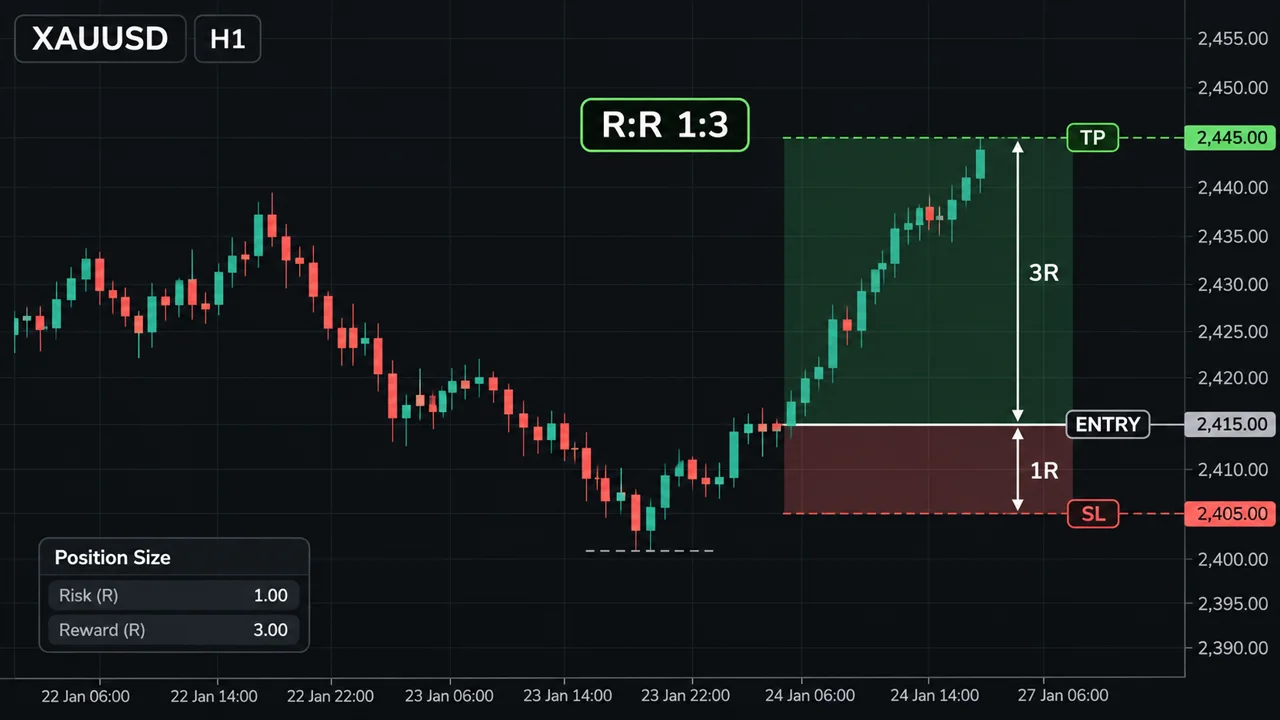
การเทรดแก้แค้น (Revenge Trading) และวิธีหยุดมันRevenge Trading and How to Stop It
เข้าใจว่าทำไมหลังขาดทุนเราถึงอยากเอาคืนทันที ดูตัวอย่างตัวเลขว่ามันทำพอร์ตพังเร็วแค่ไหน และกฎหยุดที่ใช้ได้จริงWhy a loss makes you want to win it back immediately, what that costs in real numbers, and stop rules that actually work.
ในบทความนี้ · 6
In this article · 6
การเทรดแก้แค้น (Revenge Trading) คือการเปิดไม้ใหม่ทันทีหลังขาดทุน เพื่อ "เอาเงินคืน" มากกว่าเพราะเห็นจังหวะตามแผน มักมาพร้อมล็อตที่ใหญ่ขึ้นและการตัดสินใจที่เร็วขึ้น นี่เป็นหนึ่งในสาเหตุที่ทำให้พอร์ตเล็กหายได้ในวันเดียว เพราะความเสียหายไม่ได้มาจากไม้แรกที่ขาดทุน แต่มาจากไม้ที่ตามมาหลังจากนั้น
Revenge Trading เกิดขึ้นได้อย่างไร
เมื่อขาดทุน สมองรับรู้เป็นความเจ็บปวดและความไม่ยุติธรรม เรามักคิดว่า "ตลาดเอาของเราไป" และอยากทวงคืนทันที ความคิดนี้เปลี่ยนเป้าหมายของเราจาก "เทรดตามแผน" เป็น "ทำให้ยอดวันนี้กลับมาเป็นศูนย์" ซึ่งเป็นเป้าหมายที่ตลาดไม่สนใจเลย
ลำดับเหตุการณ์ที่พบบ่อยคือ
- ขาดทุนไม้แรกตามปกติ ซึ่งอยู่ในแผน
- รู้สึกหงุดหงิด เปิดไม้ใหม่ทันทีในทิศเดิมหรือกลับทิศ โดยไม่มีสัญญาณ
- เพิ่มล็อตเพื่อให้ "ได้คืนในไม้เดียว"
- พอขาดทุนอีก ก็เลื่อน SL หรือถอด SL ออก
- ไม้สุดท้ายที่ขาดทุนใหญ่ที่สุด มักเป็นไม้ที่ไม่ได้วางแผนเลย
สัญญาณเตือน
- เปิดไม้ใหม่ภายในไม่กี่นาทีหลังโดน SL
- ล็อตของไม้ถัดไปใหญ่กว่าไม้ที่เพิ่งขาดทุน
- คำในหัวคือ "เอาคืน" "ต้องได้" "ไม่ยอม"
- กลับทิศไปมา Buy แล้ว Sell แล้ว Buy ในเวลาสั้น ๆ
- เทรดคู่เงินหรือสินทรัพย์ที่ปกติไม่ได้เทรด
- ไม่ได้เปิดดูไทม์เฟรมใหญ่ ไม่ได้ดูปฏิทินข่าว
กฎหยุดการเทรดแก้แค้น
- พักบังคับหลังขาดทุน เช่น หลังโดน SL ห้ามเปิดไม้ใหม่ 30 นาที วางมือถือ เดินไปทำอย่างอื่น
- กฎล็อตห้ามโต ล็อตของไม้ถัดไปต้องไม่เกินล็อตปกติ ต่อให้รู้สึกมั่นใจแค่ไหน
- ลิมิตขาดทุนรายวัน เช่น ขาดทุนรวม 2% ของพอร์ต หรือแพ้ 2 ไม้ติด = หยุดวันนี้ ดู ลิมิตรายวันและรายสัปดาห์
- เช็กลิสต์ก่อนเข้าทุกไม้ ถ้าตอบ "ใช่" ไม่ครบทุกข้อ ห้ามเข้า
- คำพูดหยุดตัวเอง เช่น "ไม้ที่แล้วจบแล้ว ไม้นี้ต้องผ่านเช็กลิสต์เหมือนไม้แรกของวัน"
- เขียนบันทึกก่อนเทรดต่อ หลังขาดทุน ให้เขียน 3 บรรทัด: ไม้นั้นตามแผนไหม ผิดตรงไหน รู้สึกอย่างไร ถ้าเขียนแล้วยังหงุดหงิด แปลว่ายังไม่พร้อม
สมมติพอร์ต $2,000 เทรดทองคำ ล็อตปกติ 0.10 (0.10 ล็อต = $10 ต่อราคาขยับ $1) ไม้ 1 (ตามแผน) SL $3 โดน SL เสีย $3 × $10 = $30 (1.5% ของพอร์ต) ไม้ 2 (แก้แค้น) เข้าทันที ล็อต 0.20 ($20 ต่อ $1) SL $3 โดนอีก เสีย $3 × $20 = $60 ไม้ 3 (แก้แค้นหนัก) ล็อต 0.40 ($40 ต่อ $1) ไม่ยอมตัด เลื่อน SL จนราคาสวน $5 เสีย $5 × $40 = $200 รวมเสีย $30 + $60 + $200 = $290 = 14.5% ของพอร์ต (290 ÷ 2,000 = 0.145) ถ้าหยุดหลังไม้แรก เสียแค่ $30 ไม้ 2 และ 3 ทำให้เสียเพิ่มอีก $260 ทั้งที่ไม่มีสัญญาณเลยสักไม้ และพอร์ตที่ลดลง 14.5% ต้องทำกำไรประมาณ 17% จากยอดที่เหลือ ($290 ÷ $1,710) ถึงจะกลับมาที่เดิม
ข้อผิดพลาดที่พบบ่อย
- คิดว่าตัวเองไม่ใช่คนแบบนี้ การเทรดแก้แค้นเกิดกับทุกคน รวมถึงคนที่มีประสบการณ์ กฎต้องตั้งไว้ก่อนที่จะรู้สึก
- ตั้งลิมิตรายวันแต่ไม่บังคับใช้ ถ้าลิมิตถูกยกเลิกได้ด้วยความรู้สึก ก็ไม่ใช่ลิมิต ให้ปิดแอปหรือออกจากระบบจริง ๆ
- ใช้ระบบทบล็อตหลังแพ้ (Martingale) เป็นข้ออ้าง การเพิ่มล็อตเป็นสองเท่าหลังขาดทุน คือการเทรดแก้แค้นที่เขียนเป็นสูตร ดู ความเสี่ยงของ Martingale
- คิดว่าต้องปิดวันด้วยยอดบวก วันที่ขาดทุนเป็นเรื่องปกติของระบบไหนก็ได้ การบังคับให้ทุกวันบวกคือเชื้อเพลิงของการแก้แค้น
ใช้บนมือถือ
มือถือทำให้เปิดไม้ใหม่ได้ภายในสามวินาที ซึ่งเร็วกว่าเวลาที่สมองต้องใช้ในการสงบลง วิธีที่ได้ผลคือเพิ่ม "แรงเสียดทาน" ให้ตัวเอง เช่น ออกจากระบบบัญชีเทรดหลังโดน SL ไม้ที่สอง หรือย้ายแอปเทรดออกจากหน้าแรกของมือถือ การต้องล็อกอินใหม่ช่วยให้มีเวลาคิดอีกไม่กี่วินาที ซึ่งบ่อยครั้งก็พอแล้ว
สรุป
- การเทรดแก้แค้นคือการเทรดเพื่อเอาเงินคืน ไม่ใช่เพื่อทำตามแผน
- ความเสียหายใหญ่มักมาจากไม้ที่ตามหลังไม้แรก ไม่ใช่ไม้แรก
- ใช้พักบังคับ ล็อตห้ามโต และลิมิตขาดทุนรายวันที่บังคับใช้จริง
- วันที่ขาดทุนเป็นเรื่องปกติ ไม่ต้องจบวันด้วยยอดบวก
Revenge trading means opening a new trade right after a loss in order to "get the money back," rather than because your plan shows a setup. It usually comes with a bigger lot and faster decisions. It is one of the main ways small accounts get wiped out in a single day, because the damage does not come from the first loss — it comes from the trades that follow it.
How revenge trading happens
A loss registers in the brain as pain and unfairness. We think "the market took my money" and want it back now. That thought swaps your goal from "trade the plan" to "get today back to zero," a goal the market does not care about at all.
The typical sequence:
- A normal first loss, within the plan.
- Frustration, followed by an instant new trade in the same or opposite direction with no signal.
- A bigger lot to "get it all back in one go."
- Another loss, so the stop gets moved or removed.
- The final and largest loss is usually the one with no plan at all.
Warning signs
- Opening a new trade within minutes of a stop-out.
- The next lot is larger than the one that just lost.
- The words in your head are "win it back," "must," "not letting this go."
- Flipping direction — buy, sell, buy — in a short time.
- Trading a pair or asset you normally never touch.
- Skipping the higher timeframe and the news calendar.
Rules that stop revenge trading
- Mandatory pause after a loss — for example, no new trade for 30 minutes after a stop-out. Put the phone down and do something else.
- The lot never grows. The next trade's lot must not exceed your normal lot, however confident you feel.
- Daily loss limit — for example, −2% of the account or two losses in a row = done for the day. See daily and weekly limits.
- A checklist before every trade. If not every item is "yes," no trade.
- A stop phrase, such as "The last trade is finished. This one must pass the checklist like the first trade of the day."
- Journal before continuing. After a loss, write three lines: was it to plan, what went wrong, how do I feel. If you are still angry after writing, you are not ready.
Suppose a $2,000 account trading gold with a normal lot of 0.10 (0.10 lots = $10 per $1 move). Trade 1 (to plan): $3 stop, hit: $3 × $10 = $30 lost (1.5% of the account). Trade 2 (revenge): entered immediately with 0.20 lots ($20 per $1), $3 stop, hit again: $3 × $20 = $60 lost. Trade 3 (full revenge): 0.40 lots ($40 per $1), stop moved until price ran $5 against: $5 × $40 = $200 lost. Total: $30 + $60 + $200 = $290 = 14.5% of the account (290 ÷ 2,000 = 0.145). Stopping after trade 1 would have cost $30. Trades 2 and 3 added $260 of losses without a single signal. And a 14.5% drawdown needs roughly a 17% gain on what is left ($290 ÷ $1,710) just to get back to the start.
Common mistakes
- "I'm not that kind of trader." Revenge trading happens to everyone, experienced traders included. Rules must be set before the feeling arrives.
- Setting a daily limit but not enforcing it. If a feeling can cancel it, it is not a limit. Close the app or log out for real.
- Using a doubling system as an excuse. Doubling the lot after a loss is revenge trading written as a formula — see martingale risks.
- Believing every day must end green. Losing days are normal for any method. Forcing every day positive is fuel for revenge.
On a phone
A phone lets you open a new trade in three seconds — faster than your brain needs to calm down. The fix is friction. Log out of the trading account after the second stop-out, or move the trading app off your home screen. Having to log in again buys a few seconds of thought, and often that is enough.
Summary
- Revenge trading is trading to recover money, not to follow a plan.
- The big damage usually comes from the trades after the first loss.
- Use a mandatory pause, a no-growth lot rule and a daily loss limit you actually enforce.
- Losing days are normal; you do not have to finish every day in profit.