ความอดทนในการเทรด รอให้ราคามาหาเราPatience — Letting Price Come to You
ความอดทนคือทักษะที่ฝึกได้ ดูว่าการรอจุดเข้าที่ดีเปลี่ยนอัตราส่วนกำไรต่อความเสี่ยงอย่างไร พร้อมเทคนิครอแบบไม่ต้องจ้องจอPatience is a trainable skill — see how waiting for a better entry changes your reward-to-risk, plus ways to wait without staring at the screen.
ในบทความนี้ · 7
In this article · 7
ความอดทน (Patience) ในการเทรดมีสองแบบ คือ อดทนรอจุดเข้า และอดทนถือไม้ให้ถึงจุดออกตามแผน ทั้งสองแบบยากสำหรับคนที่เทรดบนมือถือ เพราะกราฟอยู่ในมือตลอดเวลา และทุกการขยับของราคาดูเหมือนโอกาสหรือภัยอันตราย ข่าวดีคือความอดทนไม่ได้เป็นนิสัยติดตัว มันเป็นทักษะที่ออกแบบและฝึกได้
ทำไมความอดทนสำคัญ
- จุดเข้าที่ดีกว่า = SL สั้นกว่า เมื่อความเสี่ยงเป็นเงินเท่าเดิม SL ที่สั้นกว่าทำให้ใช้ล็อตได้มากขึ้น และกำไรต่อความเสี่ยงดีขึ้น
- ไม้น้อยลงแต่คุณภาพสูงขึ้น ลดต้นทุนสเปรดและการตัดสินใจที่เหนื่อยล้า ดู เทรดถี่เกินไป
- ถือถึงเป้า การปิดไม้เร็วเกินไปทำให้ไม้ชนะเล็กลง ซึ่งเปลี่ยนสมการของระบบทั้งหมด ดู อัตราส่วนกำไรต่อความเสี่ยงและอัตราชนะ
ทำไมการรอถึงยาก
- สมองไม่ชอบความไม่แน่นอน การมีไม้เปิดอยู่ทำให้รู้สึกว่า "ได้ทำอะไรแล้ว"
- กลัวพลาด เมื่อราคาวิ่งโดยที่เราไม่ได้อยู่ในไม้
- เบื่อ ตลาดส่วนใหญ่ใช้เวลาเคลื่อนที่ช้า ๆ หรือออกข้าง
- ไม่มีนิยามชัดว่ากำลังรออะไร ถ้าไม่รู้ว่ารออะไร ทุกอย่างก็ดูเหมือนสัญญาณ
เทคนิครอแบบไม่ต้องจ้องจอ
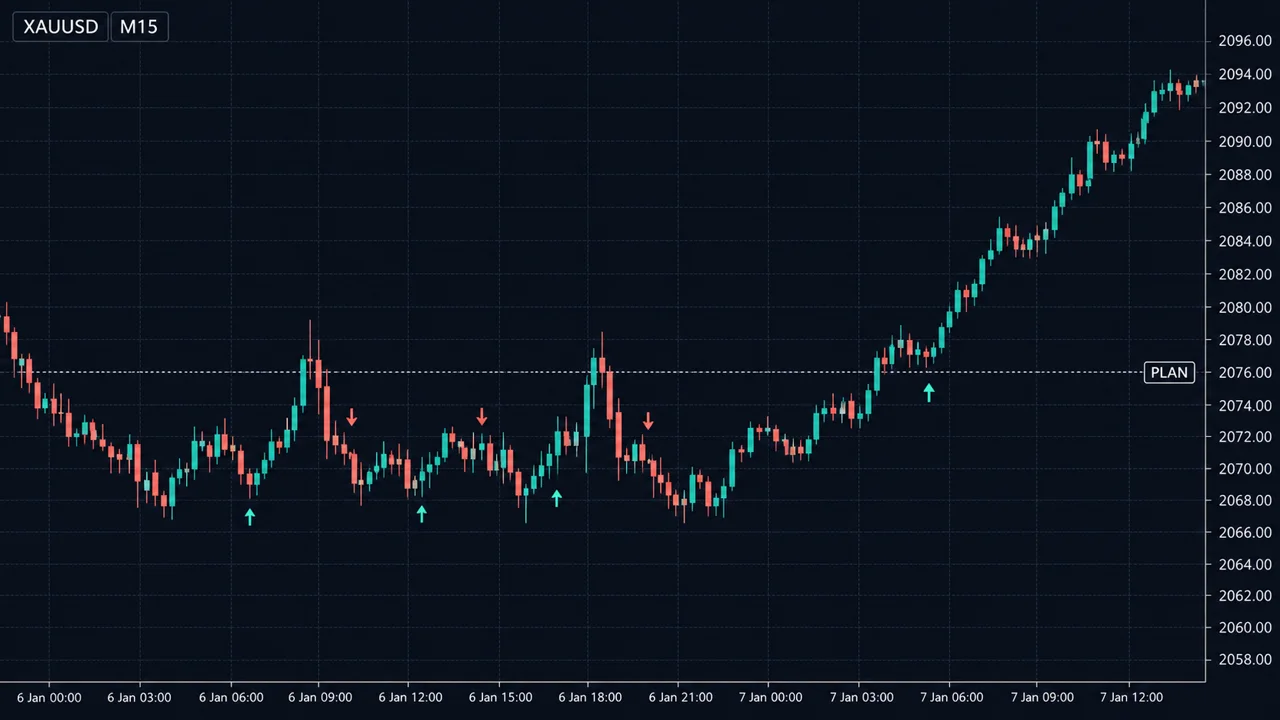
- นิยามสิ่งที่รอให้ชัด เช่น "ราคาย่อกลับมาที่โซน H1 แล้วมีแท่งปฏิเสธปิดใน M15" เขียนลงในแผน
- ตั้งการแจ้งเตือนราคา ที่ขอบโซน แล้ววางมือถือ
- ใช้คำสั่งรอ Buy Limit หรือ Sell Limit พร้อม SL/TP ให้ระบบรอแทนเรา
- กำหนดเวลาดูกราฟ เช่น ทุกครั้งที่แท่ง H1 ปิด ไม่ใช่ทุกนาที
- มีกิจกรรมระหว่างรอ ทำงาน อ่านหนังสือ ออกกำลังกาย ไม่ใช่เลื่อนดูกราฟ
- ยอมรับไม้ที่พลาด ถ้าราคาไม่ย่อมาถึงจุดที่รอ ก็ไม่ใช่ไม้ของเรา จดไว้ในบันทึกแล้วไปต่อ
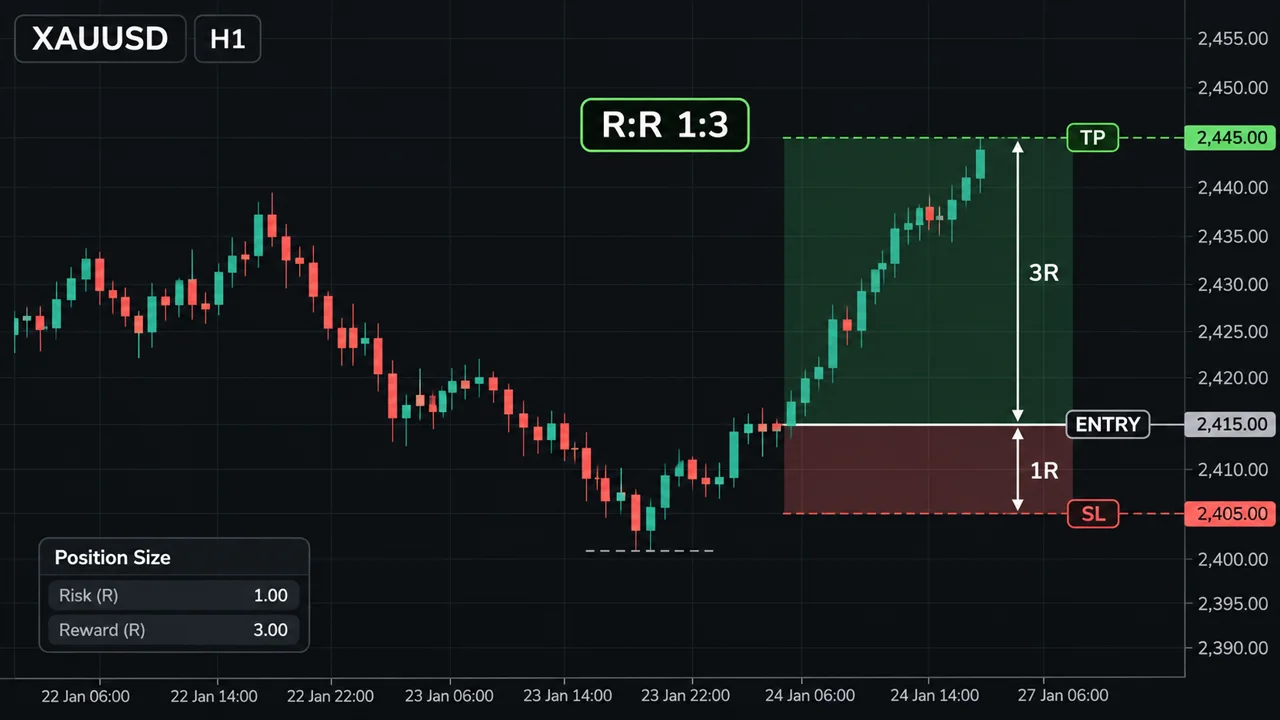
สมมติเทรดทองคำ จุดสวิงล่าสุด (ที่ใช้วาง SL) อยู่ที่ราคา S เป้าหมายอยู่ที่ S + $30 และเสี่ยงไม้ละ $12 ไล่ราคา เข้าที่ S + $12 ระยะ SL = $12 ล็อต = $12 ÷ ($12 × $100) = 0.01 ถ้าถึงเป้า ราคาวิ่ง $30 − $12 = $18 กำไร $18 = 1.5R รอย่อ เข้าที่ S + $6 ระยะ SL = $6 ล็อต = $12 ÷ ($6 × $100) = 0.02 ถ้าถึงเป้า ราคาวิ่ง $30 − $6 = $24 × $2 ต่อ $1 = กำไร $48 = 4R ความเสี่ยงเท่ากัน $12 แต่ผลตอบแทนเมื่อถูกต่างกันมากกว่าสองเท่า ข้อแลกเปลี่ยนที่ต้องยอมรับ: บางครั้งราคาจะไม่ย่อมาเลย และเราจะไม่ได้เข้า ซึ่งคือราคาของความอดทน
ดูภาพด้านล่าง สมมติให้จุดสวิง S อยู่ที่ 1990
อดทนตอนถือไม้
- ตั้ง TP ไว้ตั้งแต่แรก และเลือกวิธีจัดการไม้ไว้ล่วงหน้า เช่น ปิดบางส่วนที่ 1R หรือถือเต็ม
- ปิดหน้าจอกำไรขาดทุนเรียลไทม์ ดูแค่ตอนแท่งปิดตามเวลาที่กำหนด
- ถ้าจะปิดก่อนเป้า ต้องมีเหตุผลที่เขียนไว้ในแผน เช่น ข่าวแรงกำลังจะออก ไม่ใช่ "รู้สึกไม่ดี"
ข้อผิดพลาดที่พบบ่อย
- รอจนเกินพอดี รอสัญญาณที่สมบูรณ์แบบจนไม่เคยเข้าเลย ความอดทนคือการรอสิ่งที่นิยามไว้ ไม่ใช่รอความมั่นใจ 100%
- อดทนผิดเรื่อง อดทนถือไม้ขาดทุนที่โดน SL ไปแล้วในใจ นั่นคือความดื้อ ไม่ใช่ความอดทน
- ตั้งคำสั่งรอแล้วยกเลิกเพราะใจร้อน ก่อนราคาจะมาถึง
- ไม่นับต้นทุนของการรอ ไม้ที่พลาดเป็นส่วนหนึ่งของแผน ไม่ใช่ความล้มเหลว
- เทรดตลาดที่ไม่เหมาะกับนิสัย ถ้าทนรอหลายวันไม่ได้ การเทรดระยะยาวมาก ๆ อาจไม่เหมาะ ให้เลือกสไตล์ที่ทำได้จริง
ใช้บนมือถือ
ในแอป MT4/MT5 ตั้งคำสั่งรอพร้อม SL และ TP ได้ในหน้าส่งคำสั่ง เลือกประเภท Buy Limit หรือ Sell Limit กรอกราคาที่ต้องการ แล้วตั้งวันหมดอายุของคำสั่งถ้าแอปรองรับ จะได้ไม่มีคำสั่งเก่าค้างไว้แล้วถูกเปิดในวันที่สภาพตลาดเปลี่ยนไปแล้ว
สรุป
- ความอดทนมีสองแบบ: รอจุดเข้า และถือถึงจุดออก
- จุดเข้าที่ดีกว่าทำให้ SL สั้นลง และผลตอบแทนต่อความเสี่ยงดีขึ้นมาก
- นิยามสิ่งที่รอให้ชัด แล้วให้การแจ้งเตือนหรือคำสั่งรอทำงานแทน
- การพลาดบางไม้คือราคาของความอดทน และเป็นส่วนหนึ่งของแผน
Patience in trading comes in two forms: waiting for the entry, and holding the trade to its planned exit. Both are hard for phone traders, because the chart is in your hand all day and every tick looks like an opportunity or a threat. The good news is that patience is not a fixed trait. It is a skill you can design for and practise.
Why patience matters
- A better entry means a shorter stop. With the same money at risk, a shorter stop allows a bigger lot and improves reward-to-risk.
- Fewer, better trades. Lower spread costs and less decision fatigue. See overtrading.
- Holding to target. Closing too early shrinks your winners, which changes the whole maths of the method. See risk-reward and win rate.
Why waiting is hard
- The brain dislikes uncertainty; having a position open feels like "doing something."
- Fear of missing out when price moves without you.
- Boredom — markets spend most of their time drifting or moving sideways.
- No clear definition of what you are waiting for. If you do not know, everything looks like a signal.
Ways to wait without staring at the screen
- Define exactly what you are waiting for, for example "price pulls back into the H1 zone and an M15 rejection candle closes." Put it in your plan.
- Set a price alert at the edge of the zone, then put the phone down.
- Use a pending order — buy limit or sell limit with SL/TP — and let the platform wait for you.
- Schedule chart checks, for example whenever an H1 candle closes, not every minute.
- Have something to do while waiting — work, read, exercise — rather than scrolling the chart.
- Accept missed trades. If price never reaches your level, it was not your trade. Note it in the journal and move on.
Suppose a gold trade where the last swing (used for the stop) is at price S, the target is S + $30, and risk is $12 per trade. Chasing: enter at S + $12. Stop distance $12, so lot = $12 ÷ ($12 × $100) = 0.01. At target, price moves $30 − $12 = $18, profit $18 = 1.5R. Waiting for the pullback: enter at S + $6. Stop distance $6, so lot = $12 ÷ ($6 × $100) = 0.02. At target, price moves $30 − $6 = $24 × $2 per $1 = profit $48 = 4R. Exactly the same risk, but the reward when right is more than twice as large. The trade-off you must accept: sometimes price never pulls back and you never get in. That is the price of patience.
See the picture below, taking the swing S as 1990.
Patience while holding a trade
- Set the target at entry and decide your management method in advance — partial close at 1R, or hold the full position.
- Turn off live profit-and-loss display; look only at scheduled candle closes.
- If you close before target, it needs a reason written in your plan — major news about to hit, for example — not "a bad feeling."
Common mistakes
- Waiting too long for a perfect signal and never entering. Patience is waiting for what you defined, not for 100% certainty.
- Patience in the wrong place — "patiently" holding a loser that has already hit your mental stop. That is stubbornness, not patience.
- Cancelling a pending order out of impatience before price arrives.
- Not counting the cost of waiting. Missed trades are part of the plan, not a failure.
- A style that does not fit you. If you cannot wait days, a very long-term style may not suit you. Choose one you can actually follow.
On a phone
In MT4/MT5 mobile you can place pending orders with SL and TP from the order screen: choose Buy Limit or Sell Limit, enter the price, and set an expiry if the app supports it. That way no forgotten order sits there and triggers days later when conditions have changed.
Summary
- Patience has two forms: waiting for the entry and holding to the exit.
- A better entry shortens the stop and can greatly improve reward-to-risk.
- Define what you are waiting for, then let alerts or pending orders do the waiting.
- Missing some trades is the price of patience and part of the plan.