FOMO กลัวตกรถ ทำไมเราไล่ราคาFOMO — Why We Chase Price
รู้จักอาการกลัวตกรถ (FOMO) ที่ทำให้เข้าไม้ปลายทาง พร้อมสัญญาณเตือนและกฎ "รอให้ราคามาหาเรา" ที่ใช้ได้ทันทีRecognise the fear of missing out that makes you enter at the end of a move, plus warning signs and a wait-for-price routine you can use today.
ในบทความนี้ · 6
In this article · 6
FOMO ย่อมาจาก Fear Of Missing Out หรือ "กลัวตกรถ" คืออาการที่เห็นราคาวิ่งแรงแล้วรู้สึกว่าต้องเข้าเดี๋ยวนี้ ไม่งั้นจะพลาดโอกาส เทรดเดอร์บนมือถือเจออาการนี้บ่อยเป็นพิเศษ เพราะการแจ้งเตือน กลุ่มไลน์ และคลิปสั้นทำให้เราเห็นคนอื่น "ได้กำไร" ตลอดเวลา ปัญหาคือการเข้าไม้ด้วย FOMO มักเกิดตอนที่ราคาวิ่งไปไกลแล้ว ความเสี่ยงสูงขึ้น แต่โอกาสที่เหลือกลับน้อยลง
FOMO ทำงานอย่างไร
สมองเรามองการ "พลาด" เป็นความเจ็บปวดแบบหนึ่ง เมื่อเห็นแท่งเทียนเขียวยาวหลายแท่งติดกัน เรารู้สึกเหมือนกำลังเสียเงินทั้งที่ยังไม่ได้เข้าเลย ความรู้สึกนั้นกดดันให้เข้าไม้แบบไม่มีแผน ซึ่งมีปัญหาสามข้อ
- จุดเข้าแย่ ราคาอยู่ไกลจากแนวรับ (Support) หรือจุดสวิงล่าสุด ทำให้ SL ต้องห่างมาก หรือไม่ก็ตั้ง SL แคบจนโดนกวาดง่าย
- ไม่มีแผนออก เข้าเพราะความรู้สึก จึงไม่รู้ว่าจะปิดที่ไหน
- ล็อตไม่ได้คำนวณ มักกดล็อตเดิมจากไม้ก่อน หรือเพิ่มล็อตเพราะ "รอบนี้มันวิ่งแรง"
นอกจากนี้ ช่วงที่ราคาวิ่งแรงที่สุดมักเป็นช่วงที่คนเข้าช้ากำลังแห่กันเข้า และคนที่เข้าก่อนกำลังขายทำกำไร ราคาจึงมักย่อตัวกลับ (Pullback) หรือหลอกเบรก (False Breakout) ทำให้คนที่ไล่ราคาโดน SL เป็นกลุ่มแรก
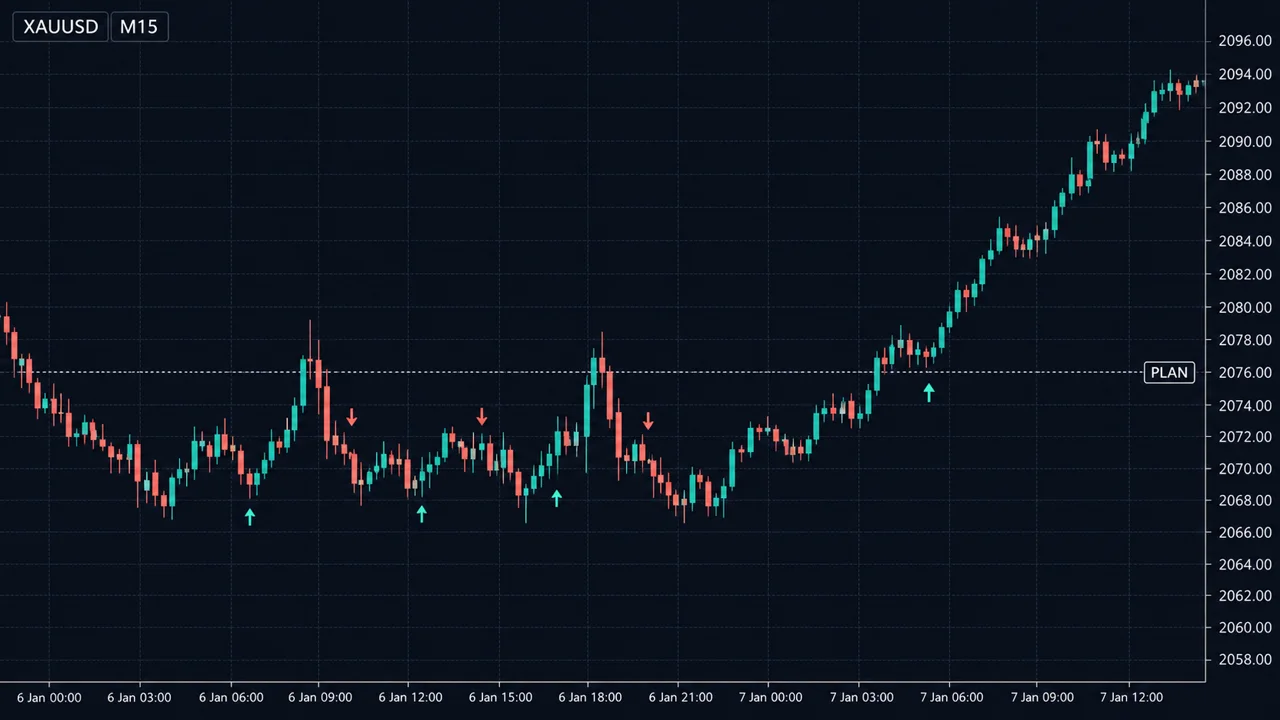
ดูภาพด้านล่าง ราคาวิ่ง $15 แล้วมีคนไล่ Buy ใกล้ยอด
สัญญาณเตือนว่ากำลังโดน FOMO
- คิดว่า "ถ้าไม่เข้าตอนนี้ จะไม่ได้เข้าอีกแล้ว"
- เข้าไม้จากการแจ้งเตือนหรือข้อความคนอื่น โดยยังไม่เปิดกราฟเอง
- ไม่ได้ดูไทม์เฟรมใหญ่ก่อนเข้า
- กดคำสั่งตลาด (Market Order) ทันทีทั้งที่ปกติใช้คำสั่งรอ
- หลังเข้าแล้วรู้สึกโล่งใจ ไม่ใช่รู้สึกว่าทำตามแผน ความโล่งใจคือสัญญาณว่าเราเข้าเพื่อดับความกระวนกระวาย ไม่ใช่เพราะมีจังหวะ
วิธีรับมือ FOMO
- เขียนเงื่อนไขเข้าไม้ล่วงหน้า ถ้าราคาไม่ตรงเงื่อนไข ก็ไม่ใช่โอกาสของเรา ดูวิธีเขียนใน แผนการเทรด
- กฎระยะห่าง ถ้าราคาห่างจากจุดสวิงล่าสุดเกินระยะ SL ปกติของเรา ให้ข้าม เพราะความเสี่ยงต่อรางวัลแย่ลงแล้ว
- ใช้คำสั่งรอ (Pending Order) ตั้ง Buy Limit หรือ Sell Limit ไว้ที่โซนที่อยากได้ ถ้าราคาไม่กลับมาก็ไม่เป็นไร
- กฎ 15 นาที เมื่อรู้สึกอยากเข้าทันที ให้ตั้งเวลา 15 นาทีแล้ววางมือถือ ถ้ากลับมาแล้วยังตรงแผนค่อยเข้า
- ยอมรับว่าการพลาดเป็นเรื่องปกติ ตลาดเปิดทุกวัน จังหวะใหม่มาเสมอ การพลาดไม้หนึ่งไม่ทำให้เงินลดลงเลย แต่การไล่ราคาทำให้ลดได้
- ปิดกลุ่มสัญญาณหรือแจ้งเตือนที่ไม่ได้ใช้จริง ยิ่งเห็นคนอื่นอวดกำไรน้อย FOMO ยิ่งน้อย
สมมติพอร์ต $800 ทองคำวิ่งขึ้น $15 ใน 20 นาที เทรดเดอร์รีบกด Buy 0.05 ล็อตใกล้จุดสูงสุด จุดสวิงล่าสุดอยู่ต่ำกว่าจุดเข้า $8 จึงตั้ง SL $8 0.05 ล็อต = $5 ต่อราคาขยับ $1 ดังนั้นความเสี่ยงคือ $8 × $5 = $40 หรือ 5% ของพอร์ต (40 ÷ 800 = 0.05) ราคาย่อตัวกลับ $9 ตามปกติหลังวิ่งแรง โดน SL เสีย $40 ถ้าใช้กฎของตัวเองคือเสี่ยง 1% = $8 และรอราคาย่อมาใกล้จุดสวิง จนระยะ SL เหลือ $4 ล็อตที่ถูกต้องคือ $8 ÷ ($4 × $100 ต่อ 1 ล็อต) = 0.02 ล็อต ถ้าผิดก็เสียแค่ $8 และถ้าราคาไม่ย่อมาเลย ก็ไม่เสียอะไร
ข้อผิดพลาดที่พบบ่อย
- คิดว่า FOMO เกิดแค่ตอนราคาขึ้น จริง ๆ เกิดตอนราคาร่วงแรงด้วย ทำให้รีบ Sell ปลายทาง
- เปลี่ยนจากไล่ราคามาเป็น "ไม่เข้าเลย" หลังโดนบ่อย ๆ จนพลาดจังหวะที่ตรงแผนจริง ๆ ทางแก้คือกฎที่ชัด ไม่ใช่ความกลัวแบบใหม่
- ไล่ราคาซ้ำหลังโดน SL เพราะคิดว่า "รอบนี้ไปจริง" ซึ่งผสมกับการเทรดแก้แค้น ดู การเทรดแก้แค้น
- ใช้ SL แคบเพื่อให้ล็อตใหญ่ ตอนไล่ราคา ทำให้โดนกวาดจากความผันผวนปกติ
ใช้บนมือถือ
ตั้งการแจ้งเตือนราคา (Price Alert) ไว้ที่โซนที่อยากเข้า แทนการแจ้งเตือนว่า "ราคาวิ่งแรง" แบบนี้มือถือจะเรียกเราเมื่อราคามาหาเรา ไม่ใช่เมื่อเรากำลังจะพลาด ถ้าใช้แอปที่มีวิดเจ็ตราคาบนหน้าจอหลัก ลองปิดมันในวันที่รู้ตัวว่าใจร้อน
สรุป
- FOMO คือความกลัวพลาด ทำให้เข้าไม้ปลายทาง SL ห่าง และไม่มีแผนออก
- สัญญาณเตือน: เข้าเพราะข้อความคนอื่น กด Market ทันที และรู้สึก "โล่ง" หลังเข้า
- ใช้คำสั่งรอ กฎระยะห่าง และกฎ 15 นาที
- การพลาดไม้ไม่ทำให้เสียเงิน การไล่ราคาทำให้เสียได้
FOMO — the fear of missing out — is the urge to jump in right now because price is moving hard and you think the chance will vanish. Phone traders get it more than most: notifications, chat groups and short videos show other people "making money" all day. The problem is that a FOMO entry usually happens after price has already travelled a long way, so the risk is higher and the remaining opportunity is smaller.
How FOMO works
The brain treats missing out as a kind of pain. Watching several long green candles in a row feels like losing money even though you have no position. That pressure pushes you into an unplanned entry with three built-in problems:
- A poor entry. Price is far from support or the last swing, so the stop must be wide — or it is set tight and gets swept easily.
- No exit plan. You entered on a feeling, so you do not know where to get out.
- An uncalculated lot. You reuse the last trade's lot, or increase it because "it's really running."
On top of that, the fastest part of a move is often when late buyers pile in and early buyers take profit. Price frequently pulls back or fakes a breakout, and the chasers are the first to be stopped out.
See the picture below: price runs $15 and someone chases a buy near the top.
Warning signs you are in FOMO
- Thinking "if I don't get in now, I never will."
- Entering from someone else's alert before opening the chart yourself.
- Skipping the higher timeframe check.
- Hitting a market order immediately when you normally use pending orders.
- Feeling relief after entering rather than feeling you followed a plan. Relief means you entered to stop the anxiety, not because there was a setup.
How to handle FOMO
- Write entry conditions in advance. If price does not meet them, it is not your trade. See trading plan.
- Distance rule. If price is further from the last swing than your normal stop distance, skip it — the risk-to-reward has already deteriorated.
- Use pending orders. Place a buy limit or sell limit at the zone you want. If price never comes back, fine.
- The 15-minute rule. When you feel the urge to enter instantly, set a 15-minute timer and put the phone down. If it still fits the plan afterwards, take it.
- Accept that missing trades is normal. The market opens every day and new setups always come. Missing a move costs you nothing; chasing one can.
- Mute the signal groups and alerts you do not actually use. The fewer profit screenshots you see, the less FOMO you feel.
Suppose a $800 account. Gold rallies $15 in 20 minutes and the trader buys 0.05 lots near the high. The last swing low is $8 below the entry, so the stop is $8. 0.05 lots = $5 per $1 move, so the risk is $8 × $5 = $40, or 5% of the account (40 ÷ 800 = 0.05). Price makes a normal $9 pullback after the burst and the stop is hit: −$40. Using their own rule of 1% risk = $8 and waiting for a pullback near the swing so the stop is only $4, the correct lot is $8 ÷ ($4 × $100 per 1.00 lot) = 0.02 lots. If wrong, the loss is $8 — and if the pullback never comes, the loss is zero.
Common mistakes
- Thinking FOMO only happens on rallies. It happens on sharp drops too, leading to late sells at the bottom.
- Swinging from chasing to "never entering" after being burnt, and then missing real plan setups. The cure is clear rules, not a new fear.
- Chasing again after being stopped out because "this time it's real" — FOMO mixed with revenge trading.
- Using a tight stop to justify a bigger lot while chasing, so normal volatility knocks you out.
On a phone
Set price alerts at the zone where you want to enter, instead of alerts for "price moving fast." That way your phone calls you when price comes to you, not when you are about to miss out. If you have a price widget on your home screen, consider removing it on days you know you feel impatient.
Summary
- FOMO is the fear of missing out; it creates late entries, wide stops and no exit plan.
- Warning signs: entering from others' messages, instant market orders, feeling "relief" after entry.
- Use pending orders, a distance rule and the 15-minute rule.
- Missing a trade costs nothing; chasing one can.