ให้คะแนนที่กระบวนการ ไม่ใช่ผลลัพธ์ (Process over Outcome)Process over Outcome
ไม้ที่ชนะอาจเป็นไม้ที่แย่ และไม้ที่แพ้อาจเป็นไม้ที่ดี เรียนรู้วิธีให้คะแนนการเทรดจากกระบวนการ เพื่อไม่ให้ผลระยะสั้นหลอกเราA winning trade can be a bad trade and a losing trade can be a good one — learn to grade trades on process so short-term results stop fooling you.
ในบทความนี้ · 6
In this article · 6
ในตลาด ผลของไม้เดียวมีโชคปนอยู่เสมอ เราอาจทำทุกอย่างถูกแล้วยังแพ้ หรือทำผิดทุกอย่างแล้วยังชนะ ถ้าเราตัดสินตัวเองจากผลของแต่ละไม้ เราจะเรียนรู้ผิด ๆ เช่น จำได้ว่า "ถอด SL แล้วรอดได้" หรือ "ทำตามแผนแล้วยังแพ้ ไม่ต้องทำตามก็ได้" การให้คะแนนที่กระบวนการ (Process) แทนผลลัพธ์ (Outcome) คือวิธีแก้ปัญหานี้
ไม้ดีกับไม้ที่ได้กำไร ไม่ใช่เรื่องเดียวกัน
ลองแบ่งทุกไม้ออกเป็นสี่ช่อง
| ผลกำไร | ผลขาดทุน | |
|---|---|---|
| ทำตามแผน | ไม้ดีที่ได้ผลดี | ไม้ดีที่โชคไม่เข้าข้าง |
| ไม่ทำตามแผน | ไม้แย่ที่โชคดี | ไม้แย่ที่ได้ผลตามสมควร |
ช่องที่อันตรายที่สุดคือ "ไม้แย่ที่โชคดี" เพราะมันสอนให้เราทำพฤติกรรมเสี่ยงซ้ำ ส่วนช่อง "ไม้ดีที่โชคไม่เข้าข้าง" คือช่องที่ทำให้หลายคนเลิกทำตามแผน ทั้งที่มันเป็นส่วนปกติของระบบที่มีความได้เปรียบ
ทำไมผลระยะสั้นหลอกเรา
ระบบที่มีความได้เปรียบหมายถึงค่าเฉลี่ยของผลบวกเมื่อเทรดจำนวนมาก ไม่ได้หมายความว่าทุกไม้หรือทุกสัปดาห์จะบวก ดู ค่าคาดหวัง (Expectancy) ในไม้จำนวนน้อย ความผันผวนสูงจนกลบความได้เปรียบได้ง่าย ดังนั้นสิ่งเดียวที่เราควบคุมได้จริงในแต่ละไม้ คือคุณภาพของการตัดสินใจ
วิธีให้คะแนนกระบวนการ
ทำใบให้คะแนนสั้น ๆ ใช้กับทุกไม้ เช่น 5 ข้อ ข้อละ 1 คะแนน
- เข้าตามเงื่อนไขในเช็กลิสต์ครบ
- ล็อตตรงตามสูตรความเสี่ยง
- ตั้ง SL และ TP ตั้งแต่เปิดไม้
- ไม่แก้ไม้ระหว่างทางโดยไม่มีเหตุผลตามแผน
- บันทึกไม้ลงสมุดภายในวันเดียวกัน
ตั้งเป้าเป็นคะแนนเฉลี่ย เช่น 4.5 จาก 5 ต่อสัปดาห์ แทนเป้าเป็นเงิน และทบทวนว่าข้อไหนหลุดบ่อยที่สุด
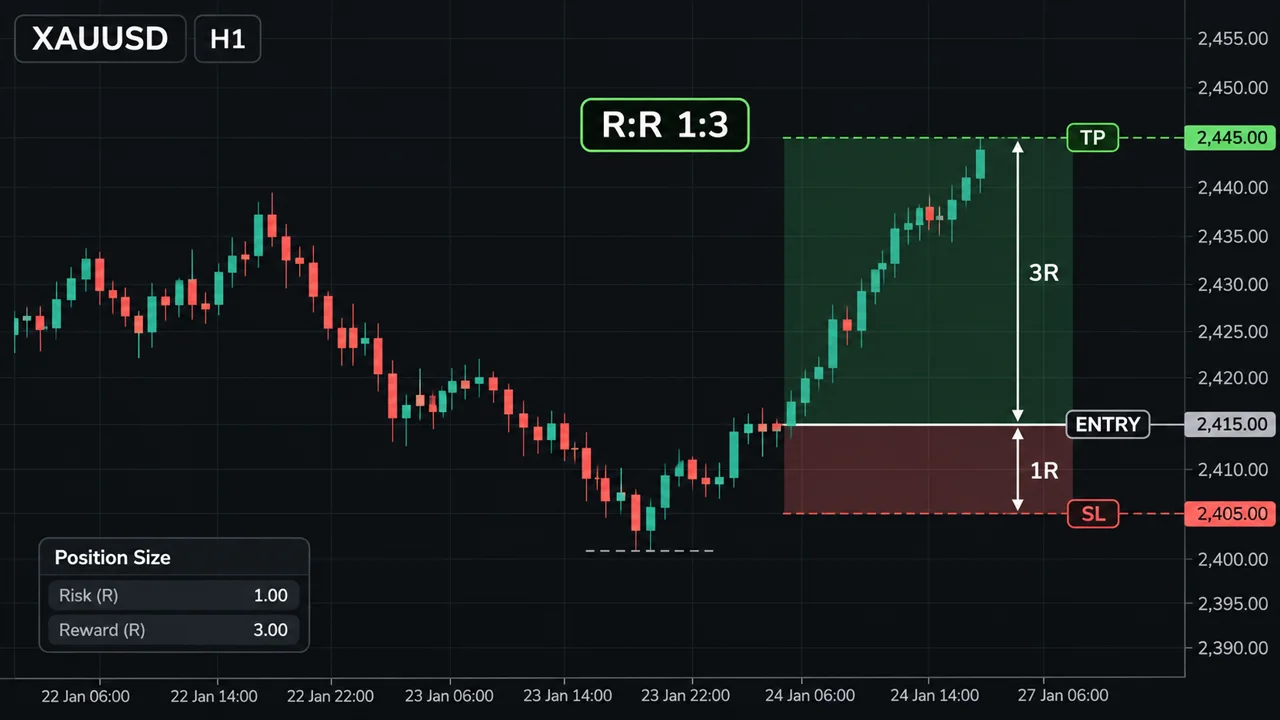
สมมติพอร์ต $2,000 เสี่ยงไม้ละ 1R = $20 ไม้ A ทำตามแผนครบ ตั้ง SL โดน SL เสีย $20 คะแนนกระบวนการ 5/5 ไม้ B เข้าเพราะ FOMO ใช้ล็อต 3 เท่า ไม่ตั้ง SL ราคาสวนก่อนแล้วกลับมา ปิดได้ +$60 คะแนนกระบวนการ 1/5 ถ้าดูแค่ผล ไม้ B ดีกว่า แต่ถ้าทำแบบไม้ B ซ้ำ ๆ วันหนึ่งราคาจะไม่กลับมา และไม่มี SL หยุดความเสียหาย ลองดูระบบสมมติที่ชนะ 45% ได้เฉลี่ย 2R ต่อไม้ชนะ และเสีย 1R ต่อไม้แพ้: ค่าคาดหวัง = 0.45 × 2 − 0.55 × 1 = 0.90 − 0.55 = 0.35R ต่อไม้ ใน 40 ไม้ ค่าคาดหวังรวมคือ 40 × 0.35 = 14R หรือ 14 × $20 = $280 แต่นี่เป็นค่าเฉลี่ยทางทฤษฎี ในช่วง 10 ไม้ใดก็ได้ผลอาจติดลบ ทางเดียวที่จะได้ค่าคาดหวังนั้นคือทำแบบไม้ A ซ้ำ ๆ
ข้อผิดพลาดที่พบบ่อย
- ใช้คำว่า "กระบวนการ" เป็นข้ออ้าง ถ้าทำตามแผนครบแต่ขาดทุนต่อเนื่องหลายร้อยไม้ อาจเป็นที่ระบบ ต้องตรวจด้วยข้อมูล ไม่ใช่บอกว่า "ฉันทำตามกระบวนการแล้ว" ไปตลอด
- ให้คะแนนตัวเองแบบเข้าข้าง ถ้าไม่แน่ใจว่าข้อไหนผ่าน ให้ถือว่าไม่ผ่าน
- ไม่ให้คะแนนไม้ที่ชนะ ไม้ชนะที่ทำผิดกฎต้องถูกบันทึกเป็นไม้แย่ด้วย ไม่งั้นนิสัยเสี่ยงจะซ่อนอยู่
- เปลี่ยนแผนเพราะไม้แพ้ไม่กี่ไม้ การแพ้ในช่อง "ไม้ดี" เป็นข้อมูลที่ดี ไม่ใช่สัญญาณให้รื้อแผน
- เป้าหมายเป็นเงินรายวัน ทำให้กลับไปตัดสินจากผลลัพธ์อีก
ใช้บนมือถือ
ใส่ช่อง "คะแนนกระบวนการ 0–5" ในแบบฟอร์มบันทึกการเทรดบนมือถือ ดู บันทึกการเทรด สิ้นสัปดาห์ให้ดูกราฟของคะแนนเฉลี่ยคู่กับยอดกำไรขาดทุน ในระยะยาว ถ้าระบบมีความได้เปรียบจริง สองเส้นนี้ควรไปในทางเดียวกัน แต่ในระยะสั้นอาจสวนกันได้ ซึ่งเป็นเรื่องปกติ
สรุป
- ผลของไม้เดียวมีโชคปนอยู่ ไม่ใช่ตัวชี้วัดฝีมือ
- ไม้แย่ที่โชคดีอันตรายที่สุด เพราะสอนนิสัยผิด
- ให้คะแนนทุกไม้ด้วยเช็กลิสต์กระบวนการ ตั้งเป้าเป็นคะแนน ไม่ใช่เงิน
- ค่าคาดหวังของระบบจะเกิดได้ก็ต่อเมื่อทำกระบวนการเดิมซ้ำจำนวนมาก
In the market, the result of any single trade always contains luck. You can do everything right and still lose, or everything wrong and still win. If you judge yourself trade by trade, you learn the wrong lessons — "removing the stop worked out," or "I followed the plan and still lost, so why bother." Grading the process instead of the outcome is the fix.
A good trade and a profitable trade are not the same thing
Sort every trade into one of four boxes:
| Profit | Loss | |
|---|---|---|
| Followed plan | Good trade, good result | Good trade, bad luck |
| Broke plan | Bad trade, good luck | Bad trade, deserved result |
The most dangerous box is "bad trade, good luck," because it trains you to repeat risky behaviour. "Good trade, bad luck" is the box that makes many traders abandon their plan, even though it is a normal part of any method with an edge.
Why short-term results fool us
An edge means the average result is positive over many trades. It does not mean every trade or every week will be positive. See expectancy. Over a small number of trades, randomness easily hides the edge. So the only thing you truly control on each trade is the quality of the decision.
How to grade the process
Use a short scorecard on every trade — for example five items, one point each:
- Entry met every checklist condition.
- Lot size matched the risk formula.
- SL and TP set at entry.
- No changes to the trade without a plan-based reason.
- Trade logged in the journal the same day.
Set your goal as an average score, for example 4.5 out of 5 per week, instead of a money goal, and review which item slips most often.
Suppose a $2,000 account risking 1R = $20 per trade. Trade A: fully to plan, stop set, stop hit: −$20. Process score 5/5. Trade B: a FOMO entry with three times the normal lot and no stop. Price goes against it, then comes back, closed at +$60. Process score 1/5. On results alone, B looks better. But repeat B often enough and one day price does not come back, with no stop to limit the damage. Now take a hypothetical method that wins 45% of the time, averages 2R per win and loses 1R per loss: expectancy = 0.45 × 2 − 0.55 × 1 = 0.90 − 0.55 = 0.35R per trade Over 40 trades the expected total is 40 × 0.35 = 14R, or 14 × $20 = $280. That is a theoretical average; any stretch of 10 trades could still be negative. The only route to that expectancy is repeating trade A.
Common mistakes
- Using "process" as an excuse. If you follow the plan perfectly and lose over hundreds of trades, the method may be the problem. Check the data instead of saying "I followed the process" forever.
- Grading yourself generously. If you are unsure an item passed, mark it failed.
- Not grading winners. A rule-breaking winner must be logged as a bad trade, or risky habits stay hidden.
- Changing the plan after a few losses. Losses in the "good trade" box are useful data, not a reason to tear the plan up.
- A daily money target, which pulls you straight back to judging by outcome.
On a phone
Add a "process score 0–5" field to your phone journal form — see trading journal. At the end of the week, look at your average score next to your profit and loss. Over the long run, if the method has a real edge, the two should move in the same direction; over the short run they can diverge, and that is normal.
Summary
- A single trade's result contains luck; it is not a measure of skill.
- "Bad trade, good luck" is the most dangerous outcome because it teaches bad habits.
- Grade every trade with a process checklist; set goals in points, not money.
- A method's expectancy only shows up when you repeat the same process many times.