ICT Killzones ช่วงเวลาที่สาย ICT เลือกเทรดICT Killzones
รู้ว่า Killzone ของสาย ICT คือช่วงเวลาไหน แปลงเป็นเวลาไทยอย่างไรทั้งช่วงฤดูหนาวและฤดูร้อน และใช้มันเป็นตัวกรองเวลาเทรดอย่างมีเหตุผลLearn which hours the ICT school calls killzones, how to convert them to Thai time across daylight-saving changes, and how to use them sensibly as a time filter.
ในบทความนี้ · 6
In this article · 6
ICT (Inner Circle Trader) เป็นชื่อสำนักวิเคราะห์ที่ต่อยอดมาจากแนวคิดเรื่องโครงสร้างตลาด สภาพคล่อง และช่องว่างราคา หนึ่งในแนวคิดที่คนนำไปใช้มากที่สุดคือ Killzone หรือช่วงเวลาที่เชื่อว่าตลาดเคลื่อนไหวมีทิศทางชัดที่สุดในวัน แนวคิดนี้มีเหตุผลรองรับส่วนหนึ่ง เพราะการเปิดตลาดใหญ่มักนำปริมาณซื้อขายและความผันผวนมาด้วย แต่ก็มีส่วนที่เป็นการตีความเช่นกัน
Killzone คืออะไร
Killzone คือหน้าต่างเวลา 2–3 ชั่วโมงที่สาย ICT ให้ความสำคัญ โดยนิยามด้วย เวลานิวยอร์ก นิยามที่พบบ่อยมีดังนี้ (แต่ละแหล่งอาจต่างกันเล็กน้อย)
| Killzone | เวลานิวยอร์ก | เวลาไทย (ช่วงฤดูหนาวสหรัฐ) | เวลาไทย (ช่วงฤดูร้อนสหรัฐ) |
|---|---|---|---|
| เอเชีย (Asian) | 20:00–00:00 | 08:00–12:00 | 07:00–11:00 |
| เปิดลอนดอน (London Open) | 02:00–05:00 | 14:00–17:00 | 13:00–16:00 |
| เปิดนิวยอร์ก (New York Open) | 07:00–10:00 | 19:00–22:00 | 18:00–21:00 |
| ปิดลอนดอน (London Close) | 10:00–12:00 | 22:00–00:00 | 21:00–23:00 |
วิธีคิด: ประเทศไทยคือ UTC+7 ไม่มีเวลาออมแสง ส่วนนิวยอร์กเป็น UTC−5 ในฤดูหนาว และ UTC−4 ในฤดูร้อน ดังนั้น เวลาไทย = เวลานิวยอร์ก + 12 ชั่วโมง (ฤดูหนาว) หรือ + 11 ชั่วโมง (ฤดูร้อน)
สหรัฐและยุโรปเปลี่ยนเวลาออมแสงคนละวันกัน ทุกปีจะมีช่วงสั้น ๆ ราว 1–3 สัปดาห์ที่ระยะห่างระหว่างลอนดอนกับนิวยอร์กไม่ตรงกับปกติ ช่วงนั้นให้เช็คเวลาเปิดตลาดจริงอีกครั้ง
ทำไมเลือกช่วงเวลาเหล่านี้
- ช่วงเปิดลอนดอน เป็นช่วงที่ศูนย์กลางซื้อขายเงินตราใหญ่ที่สุดเริ่มทำงาน ปริมาณซื้อขายและความผันผวนมักเพิ่มขึ้นจากช่วงเอเชีย
- ช่วงเปิดนิวยอร์ก ตรงกับเวลาประกาศตัวเลขเศรษฐกิจสหรัฐหลายตัว และทับซ้อนกับช่วงบ่ายของลอนดอน
- ช่วงเอเชีย มักแกว่งในกรอบแคบ สาย ICT ใช้ยอดและฐานของช่วงนี้เป็น "สภาพคล่อง" ที่ช่วงลอนดอนอาจวิ่งไปกวาด
เรื่องที่ว่าช่วงเปิดตลาดใหญ่มีความผันผวนสูงกว่าช่วงอื่นเป็นสิ่งที่สังเกตได้ทั่วไปจากกราฟ ส่วนเรื่องที่ว่า "ทิศทางของวันมักถูกกำหนดในช่วงนี้" เป็นการตีความของสำนัก ไม่ใช่กฎ
วิธีใช้ Killzone ในแผนเทรด
- ใช้เป็นตัวกรองเวลา ไม่ใช่สัญญาณซื้อขาย เช่น "ฉันจะเข้าเฉพาะเมื่อสัญญาณเกิดใน Killzone ลอนดอนหรือนิวยอร์ก"
- ทำเครื่องหมายยอดและฐานของช่วงเอเชีย ก่อนลอนดอนเปิด
- ดูว่าช่วง Killzone ราคาวิ่งไปกวาดฝั่งไหน แล้วกลับเข้ากรอบหรือไม่ (ดูเรื่อง สภาพคล่องและการกวาด SL)
- หาจุดเข้าด้วยเครื่องมือของตัวเอง เช่น CHoCH บนไทม์เฟรมเล็ก หรือ FVG
- ถ้าไม่มีสัญญาณในหน้าต่าง ก็ไม่เทรด นี่คือประโยชน์จริงของ Killzone คือช่วยลดการเทรดตลอดวัน
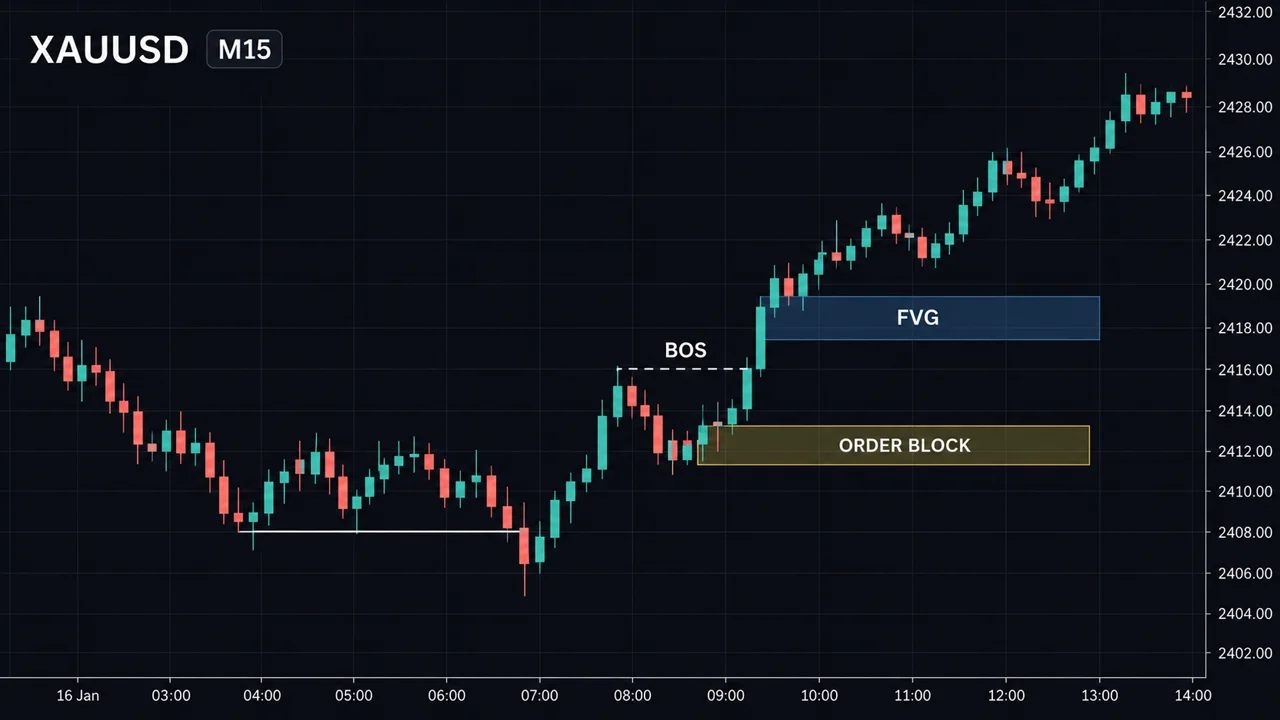
ช่วงเอเชีย (08:00–12:00 เวลาไทย) ทองคำแกว่งระหว่าง 2,004.40 ถึง 2,010.40 กรอบกว้าง 6.00 ดอลลาร์ ใน Killzone ลอนดอน (14:00–17:00) ราคาลงไปแตะ 2,003.10 ต่ำกว่าฐานเอเชีย 1.30 แล้วปิดแท่ง M15 กลับเหนือ 2,004.40 แผน: Buy ที่ 2,005.00 · SL 2,002.50 (ระยะ 2.50) · TP ที่ยอดเอเชีย 2,010.40 (ระยะ 5.40) บัญชี 500 ดอลลาร์ เสี่ยง 1% = 5 ดอลลาร์ → ล็อต = 5 ÷ (2.50 × 100) = 0.02 ล็อต ถ้าโดน SL เสีย 2.50 × 2 = 5 ดอลลาร์ · ถ้าถึง TP ได้ 5.40 × 2 = 10.80 ดอลลาร์ (RR ≈ 1 : 2.16) ผลไม้เดียวไม่ได้บอกอะไร ต้องดูผลจากหลายสิบไม้ที่ทำตามกฎเดียวกัน
ดูภาพด้านล่าง
จุดอ่อน / ข้อผิดพลาดที่พบบ่อย
- เวลาไม่ใช่ความได้เปรียบในตัวเอง Killzone บอกแค่ว่าช่วงนี้ตลาดน่าจะเคลื่อนไหวมาก ซึ่งหมายถึงทั้งโอกาสและความเสี่ยงที่มากขึ้น ไม่ได้บอกทิศ
- แปลงเวลาผิด เป็นข้อผิดพลาดที่พบบ่อยที่สุดของเทรดเดอร์ไทย โดยเฉพาะช่วงเปลี่ยนเวลาออมแสง และเวลาเซิร์ฟเวอร์โบรกเกอร์ที่แสดงบนกราฟมักไม่ใช่เวลาไทย
- ข่าวแรงอยู่ในหน้าต่างนิวยอร์ก ตัวเลขอย่าง NFP หรือ CPI ทำให้ราคากระชากทั้งสองทาง SL แคบเสี่ยงโดนลากเกินจุด (Slippage)
- นิยามหลากหลาย แต่ละครู แต่ละคลิปให้เวลาต่างกันเล็กน้อย ถ้าจะทดสอบ ต้องกำหนดเวลาให้ตายตัวก่อน
- ไม่มีหลักฐานสาธารณะว่าการเทรดเฉพาะ Killzone ให้ผลดีกว่า ถ้าอยากรู้ ให้ทดสอบระบบเดียวกันแบบมีและไม่มีตัวกรองเวลาแล้วเปรียบเทียบ
- ฝืนเทรดเพราะ "อยู่ในเวลา" อยู่ใน Killzone แต่ไม่มีสัญญาณที่ผ่านกฎ ก็ควรนั่งดูเฉย ๆ
MT4/MT5 แสดงเวลาของเซิร์ฟเวอร์โบรกเกอร์ ซึ่งหลายแห่งตั้งเป็น UTC+2 หรือ UTC+3 ให้หาส่วนต่างกับเวลาไทยให้ได้ก่อนวาดเส้นแบ่งช่วงเวลา
ใช้บนมือถือ
ตั้งนาฬิกาปลุกในโทรศัพท์ล่วงหน้า 10 นาทีก่อนแต่ละ Killzone ที่คุณเลือก เพียง 1–2 ช่วงต่อวัน จะช่วยไม่ให้เปิดแอปดูกราฟทั้งวัน และเลือกได้ว่าวันไหนพักเพราะมีข่าวแรงอยู่ในหน้าต่างนั้น
สรุป
- Killzone คือหน้าต่างเวลาที่สาย ICT กำหนดด้วยเวลานิวยอร์ก
- เวลาไทย = นิวยอร์ก + 12 ชั่วโมง (ฤดูหนาว) หรือ + 11 ชั่วโมง (ฤดูร้อน)
- ช่วงเปิดลอนดอนและนิวยอร์กมักผันผวนกว่า แต่ไม่ได้บอกทิศทาง
- ใช้เป็นตัวกรองเวลาเพื่อลดการเทรดพร่ำเพรื่อ ไม่ใช่สัญญาณเข้า
- ทดสอบระบบแบบมีและไม่มีตัวกรองเวลา ก่อนเชื่อว่ามันช่วยจริง
ICT (Inner Circle Trader) is a school of analysis built on market structure, liquidity and price gaps. One of its most widely used ideas is the killzone: a window of time when the market is believed to move with the clearest direction of the day. Part of the idea has a sensible basis — major market opens usually bring volume and volatility — and part of it is interpretation.
What a killzone is
A killzone is a 2–3 hour window that ICT traders focus on, defined in New York time. Common definitions (sources differ slightly):
| Killzone | New York time | Thai time (US winter) | Thai time (US summer) |
|---|---|---|---|
| Asian | 20:00–00:00 | 08:00–12:00 | 07:00–11:00 |
| London Open | 02:00–05:00 | 14:00–17:00 | 13:00–16:00 |
| New York Open | 07:00–10:00 | 19:00–22:00 | 18:00–21:00 |
| London Close | 10:00–12:00 | 22:00–00:00 | 21:00–23:00 |
How to convert: Thailand is UTC+7 with no daylight saving. New York is UTC−5 in winter and UTC−4 in summer. So Thai time = New York time + 12 hours (winter) or + 11 hours (summer).
The US and Europe change their clocks on different dates. Each year there is a short stretch of roughly 1–3 weeks when the gap between London and New York is not the usual one. Double-check the real session opens during those weeks.
Why these windows
- London open is when the largest currency-trading centre starts work. Volume and volatility usually pick up from the Asian session.
- New York open lines up with many US economic releases and overlaps London's afternoon.
- The Asian session often moves in a tight range. ICT traders treat its high and low as "liquidity" that London may sweep.
That major opens tend to be more volatile is something you can observe on almost any chart. The claim that "the day's direction is usually set in this window" is the school's interpretation, not a rule.
Using killzones in a trading plan
- Use it as a time filter, not a signal. For example: "I only take setups that appear during the London or New York killzone."
- Mark the Asian session high and low before London opens.
- Watch which side price sweeps during the killzone and whether it closes back inside the range (see liquidity and stop hunts).
- Find your entry with your own tools, such as a lower-timeframe CHoCH or a fair value gap.
- No setup in the window, no trade. This is the real benefit: it stops you trading all day.
During the Asian session (08:00–12:00 Thai time) gold ranges between 2,004.40 and 2,010.40, a $6.00 range. In the London killzone (14:00–17:00) price dips to 2,003.10, $1.30 below the Asian low, then an M15 candle closes back above 2,004.40. Plan: buy at 2,005.00 · stop 2,002.50 (distance 2.50) · target the Asian high at 2,010.40 (distance 5.40). Account $500, risk 1% = $5 → lot = 5 ÷ (2.50 × 100) = 0.02 lot. If stopped: 2.50 × 2 = $5 lost. If the target is hit: 5.40 × 2 = $10.80 gained (RR ≈ 1 : 2.16). One trade tells you nothing; judge the results of dozens of trades taken under the same rules.
See the chart below.
Weaknesses and common mistakes
- Time is not an edge by itself. A killzone only says the market is likely to be active, which means more opportunity and more risk. It says nothing about direction.
- Wrong time conversion. This is the most common mistake for traders in Thailand, especially around daylight-saving changes. The time shown on your chart is usually the broker's server time, not Thai time.
- Big news sits in the New York window. Releases like NFP or CPI can whip price both ways; tight stops can suffer slippage.
- Definitions vary. Different teachers and videos give slightly different hours. If you want to test it, fix the hours first.
- No public evidence that trading only killzones does better. If you want to know, test the same system with and without the time filter and compare.
- Forcing trades because "it's the right time". Being inside a killzone without a valid setup is a reason to sit on your hands.
MT4/MT5 shows the broker's server time, often set to UTC+2 or UTC+3. Work out the difference from Thai time before drawing session boxes.
On a phone
Set phone alarms 10 minutes before the one or two killzones you choose. It keeps you from opening the app all day, and lets you decide in advance to skip a window that contains major news.
Summary
- Killzones are time windows defined by ICT in New York time.
- Thai time = New York + 12 hours (winter) or + 11 hours (summer).
- London and New York opens are usually more volatile, but that does not tell you direction.
- Use killzones as a time filter to cut random trading, not as an entry signal.
- Test your system with and without the filter before believing it helps.