วินัยและกิจวัตรประจำวันของเทรดเดอร์Discipline and Daily Trading Routines
วินัยไม่ได้มาจากใจแข็ง แต่มาจากกิจวัตรที่ทำซ้ำได้ ดูตัวอย่างกิจวัตรก่อน ระหว่าง และหลังเทรด สำหรับคนเทรดบนมือถือDiscipline comes from repeatable routines, not willpower — a before, during and after routine built for phone traders.
ในบทความนี้ · 6
In this article · 6
หลายคนคิดว่าวินัยคือ "ใจแข็ง" หรือ "อดทน" แต่ในการเทรด วินัยที่ใช้ได้จริงคือการลดจำนวนครั้งที่ต้องใช้ใจแข็ง เราทำแบบนั้นได้ด้วยกิจวัตร (Routine) ที่กำหนดไว้ล่วงหน้าว่าจะทำอะไร เมื่อไหร่ และหยุดเมื่อไหร่ ยิ่งตัดสินใจล่วงหน้าได้มากเท่าไหร่ ตอนที่ตลาดวิ่งแรงก็ยิ่งเหลือเรื่องให้อารมณ์ตัดสินน้อยลงเท่านั้น
ทำไมกิจวัตรสำคัญกว่าแรงใจ
แรงใจเป็นทรัพยากรที่หมดได้ ยิ่งวันยาว ยิ่งเหนื่อย ยิ่งเพิ่งขาดทุน ยิ่งเหลือน้อย ถ้าระบบการเทรดของเราต้องพึ่ง "ใจแข็ง" ทุกครั้ง สุดท้ายจะมีวันที่ใจไม่แข็งพอ กิจวัตรช่วยได้เพราะ
- เปลี่ยนการตัดสินใจหลายเรื่องให้เป็นนิสัย ไม่ต้องคิดใหม่ทุกวัน
- สร้างจุดหยุดที่ชัดเจน เช่น เวลาเลิก จำนวนไม้สูงสุด ลิมิตขาดทุน
- ทำให้วัดผลได้ ว่าวันไหนทำตามกิจวัตร วันไหนไม่ทำ และผลต่างกันอย่างไร
กิจวัตรสามช่วง
ก่อนเทรด (10–20 นาที)
- เช็กสภาพตัวเอง นอนพอไหม เครียดเรื่องอื่นไหม ถ้าคะแนนพร้อมต่ำ ให้ลดล็อตหรือไม่เทรด
- เปิดปฏิทินเศรษฐกิจ ดูข่าวแรงของวันนี้ ดู ปฏิทินเศรษฐกิจ
- ดูไทม์เฟรมใหญ่ของตลาดที่เทรด มาร์กโซนสำคัญ
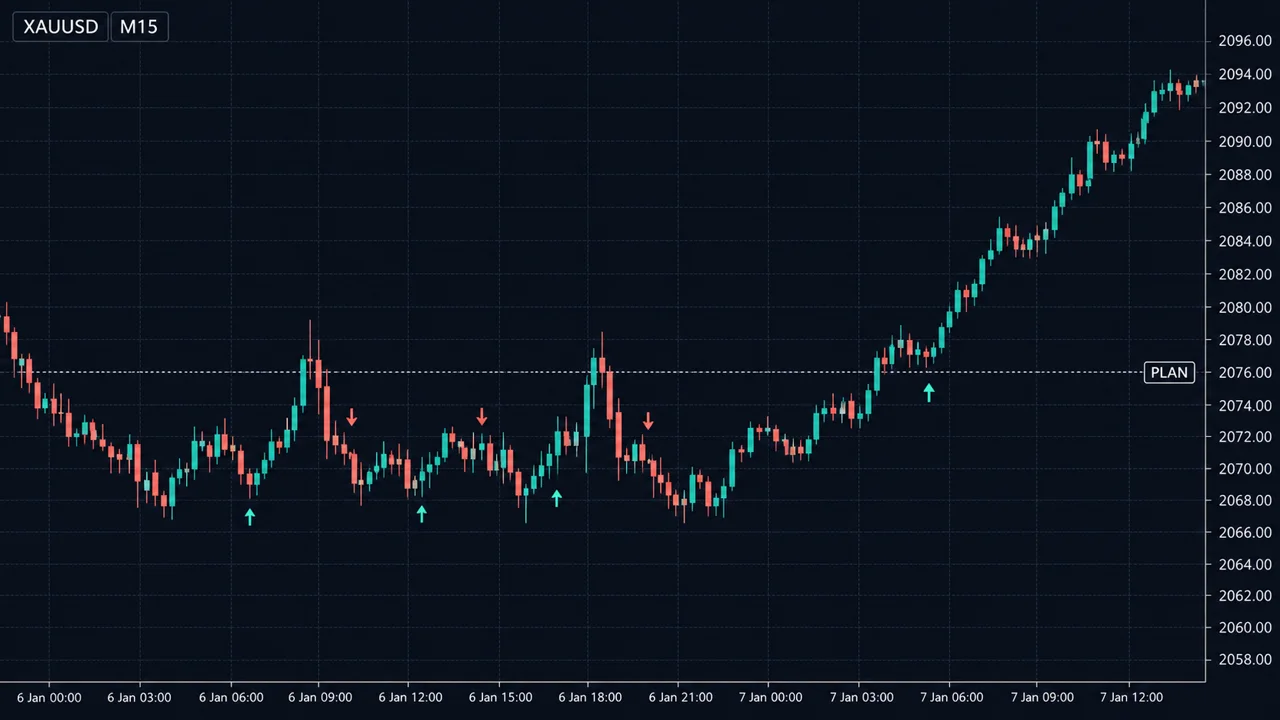
- เขียนแผนวันนี้สั้น ๆ: เทรดตลาดไหน ทิศไหนเป็นหลัก โซนไหนที่รอ
- คำนวณล็อตและเงินที่เสียได้ต่อไม้ไว้ก่อน
- ตั้งการแจ้งเตือนราคาที่โซนที่รอ
ระหว่างเทรด
- เข้าเฉพาะไม้ที่ผ่านเช็กลิสต์ครบทุกข้อ
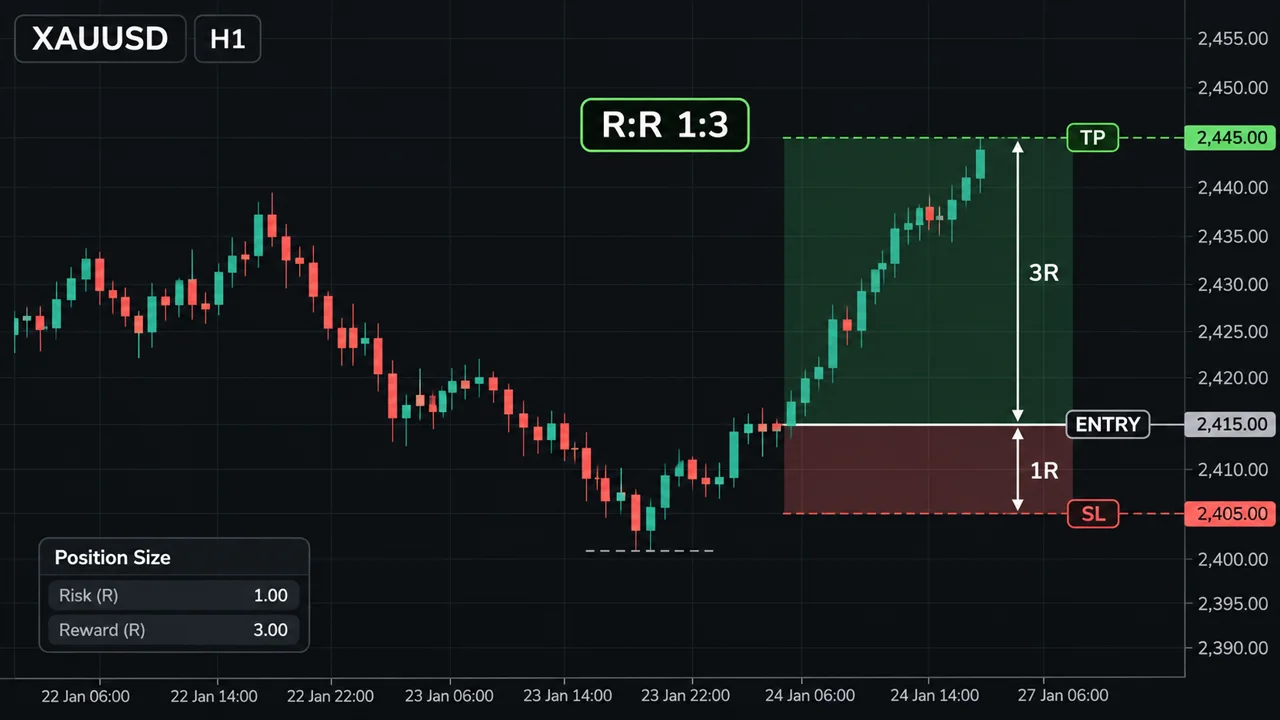
- ตั้ง SL/TP ทันทีที่เปิดไม้
- หลังวางไม้ ปิดกราฟ กลับไปทำอย่างอื่น ให้การแจ้งเตือนเรียก
- นับจำนวนไม้และยอดขาดทุนรวม ถ้าถึงลิมิตให้หยุดทันที
หลังเทรด (10 นาที)
- บันทึกทุกไม้ลงสมุดบันทึก ดู บันทึกการเทรด
- ให้คะแนนตัวเองว่าทำตามแผนกี่ข้อ ไม่ใช่ว่ากำไรเท่าไหร่
- เขียนหนึ่งเรื่องที่ทำได้ดี และหนึ่งเรื่องที่จะปรับพรุ่งนี้
- ปิดแอป แยกตัวออกจากตลาดจริง ๆ
กฎหยุดที่ควรมีทุกวัน
- ลิมิตขาดทุนรายวัน เช่น 2% ของพอร์ต
- จำนวนไม้สูงสุดต่อวัน
- แพ้ติดกันกี่ไม้ให้หยุด
- เวลาเลิกเทรดที่ชัดเจน
สมมติพอร์ต $5,000 ตั้งลิมิตขาดทุนรายวัน 2% = $100 และเสี่ยงไม้ละ 0.5% = $25 แปลว่าวันที่แย่ที่สุด เราจะแพ้ได้ไม่เกิน $100 ÷ $25 = 4 ไม้ แล้วต้องหยุด ถ้าเทรดทองคำ SL ห่าง $5 ล็อตที่ใช้คือ $25 ÷ ($5 × $100 ต่อ 1 ล็อต) = 0.05 ล็อต ถ้าวันนั้นแพ้ครบ 4 ไม้ พอร์ตเหลือ $4,900 ลดลง 2% ซึ่งเป็นวันที่แย่แต่ฟื้นได้ เทียบกับคนที่ไม่มีลิมิตและเสี่ยงไม้ละ 3% ($150) แพ้ 4 ไม้เท่ากันจะเสีย $600 หรือ 12%
ข้อผิดพลาดที่พบบ่อย
- กิจวัตรยาวเกินไป จนทำไม่ได้จริงในวันทำงาน ให้เริ่มจากสั้น ๆ ที่ทำได้ทุกวัน แล้วค่อยเพิ่ม
- ทำเฉพาะวันที่อารมณ์ดี กิจวัตรมีค่าที่สุดในวันที่ไม่อยากทำ
- ข้ามขั้นหลังเทรด เพราะเบื่อหรือเพราะขาดทุน ทั้งที่วันขาดทุนคือวันที่บันทึกมีค่าที่สุด
- ลิมิตที่ยืดหยุ่น "วันนี้ขอเกินนิดหนึ่ง" คือจุดเริ่มของการเทรดแก้แค้น
- คิดว่าวินัยคือห้ามพักเลย การพักเมื่อไม่พร้อมก็เป็นวินัยแบบหนึ่ง
ใช้บนมือถือ
ใช้แอปนาฬิกาตั้งปลุกสองครั้งต่อวัน: เวลาเริ่มกิจวัตรก่อนเทรด และเวลาเลิกเทรด เมื่อนาฬิกาปลุกเวลาเลิก ให้ปิดไม้ที่แผนบอกให้ปิด แล้วออกจากแอป ใช้โน้ตในมือถือเก็บเช็กลิสต์และแผนรายวัน จะได้เปิดดูได้ในไม่กี่วินาที ถ้าใช้เวลาว่างช่วงพักกลางวันเทรด ให้กำหนดว่าช่วงนั้นวางไม้ได้กี่ไม้และต้องตั้ง SL/TP ครบก่อนกลับไปทำงาน
สรุป
- วินัยที่ยั่งยืนมาจากกิจวัตร ไม่ได้มาจากใจแข็ง
- แบ่งเป็นก่อน ระหว่าง และหลังเทรด แต่ละช่วงมีขั้นตอนสั้น ๆ ชัดเจน
- มีกฎหยุดทุกวัน: ลิมิตขาดทุน จำนวนไม้ แพ้ติด และเวลาเลิก
- ให้คะแนนตัวเองจากการทำตามแผน ไม่ใช่จากกำไร
Many people think discipline means "being strong" or "toughing it out." In trading, the discipline that actually works is reducing how often you need to be strong at all. You do that with a routine that decides in advance what you will do, when, and when you will stop. The more you decide ahead of time, the less is left for emotion to decide when the market is moving fast.
Why routine beats willpower
Willpower runs out. The longer the day, the more tired you are, and the more recently you lost, the less you have left. If your trading depends on willpower every time, eventually there will be a day when it is not enough. A routine helps because it:
- Turns many decisions into habits, so you do not re-decide them every day.
- Creates clear stop points: an end time, a maximum trade count, a loss limit.
- Makes discipline measurable — which days you followed it, which you did not, and how results differed.
A three-part routine
Before trading (10–20 minutes)
- Check yourself. Enough sleep? Stressed about something else? If your readiness is low, trade smaller or not at all.
- Open the economic calendar and note today's high-impact events. See economic calendar.
- Look at the higher timeframe of the markets you trade and mark key zones.
- Write a short plan for today: which market, main direction, which zones you are waiting for.
- Calculate your lot and money at risk per trade in advance.
- Set price alerts at the zones you are waiting for.
During trading
- Enter only setups that pass every checklist item.
- Set SL/TP the moment the trade opens.
- After placing a trade, close the chart and do something else; let alerts call you.
- Count trades and total loss. When you hit a limit, stop immediately.
After trading (10 minutes)
- Log every trade in your journal. See trading journal.
- Score yourself on how many plan rules you followed, not on profit.
- Write one thing you did well and one thing to adjust tomorrow.
- Close the app and genuinely step away from the market.
Stop rules to have every day
- A daily loss limit, for example 2% of the account.
- A maximum number of trades per day.
- A number of consecutive losses after which you stop.
- A fixed end time.
Suppose a $5,000 account with a 2% daily loss limit = $100 and 0.5% risk per trade = $25. On the worst day you can lose at most $100 ÷ $25 = 4 trades before you must stop. Trading gold with a $5 stop, the lot is $25 ÷ ($5 × $100 per 1.00 lot) = 0.05 lots. If all 4 trades lose, the account is $4,900, down 2% — a bad day but recoverable. Compare a trader with no limit risking 3% ($150) per trade: the same 4 losses cost $600, or 12%.
Common mistakes
- A routine too long to follow on a working day. Start short enough to do daily, then add.
- Only doing it on good-mood days. A routine is most valuable on the days you do not want to do it.
- Skipping the after-trading step because you are bored or lost, when losing days are exactly when the journal matters most.
- Flexible limits. "Just a bit over today" is where revenge trading starts.
- Thinking discipline means never taking a break. Sitting out when you are not ready is discipline too.
On a phone
Use the clock app to set two alarms a day: one to start your pre-trading routine and one for your end time. When the end-time alarm rings, close any trades your plan says to close and leave the app. Keep your checklist and daily plan in your phone notes so they open in seconds. If you trade during a lunch break, decide how many trades you may place in that window and require full SL/TP before you go back to work.
Summary
- Lasting discipline comes from routine, not willpower.
- Split it into before, during and after trading, each with short, clear steps.
- Have daily stop rules: loss limit, trade count, losing streak and end time.
- Score yourself on following the plan, not on profit.