อคติทางความคิดที่ทำให้เทรดพลาด (Cognitive Biases)Cognitive Biases That Hurt Your Trading
รู้จักอคติที่พบบ่อยที่สุดในการเทรด เช่น อคติยืนยันความเชื่อ การเกลียดการขาดทุน และการยึดติดราคา พร้อมวิธีแก้ทีละตัวThe most common thinking biases in trading — confirmation bias, loss aversion, anchoring and more — and a practical counter for each.
ในบทความนี้ · 4
In this article · 4
อคติทางความคิด (Cognitive Bias) คือทางลัดที่สมองใช้ตัดสินใจเร็ว ๆ ในชีวิตประจำวันมันช่วยเราได้มาก แต่ในตลาดที่ผลลัพธ์ไม่แน่นอนและมีเงินเป็นเดิมพัน ทางลัดเหล่านี้มักพาเราไปผิดทาง ข่าวดีคือถ้าเรารู้ชื่อและรูปแบบของมัน เราจะเริ่มจับได้ว่ามันกำลังทำงาน และวางกฎกันไว้ล่วงหน้าได้
อคติที่เจอบ่อยในการเทรด
1. อคติยืนยันความเชื่อ (Confirmation Bias)
เมื่อเราตัดสินใจว่าทองจะขึ้น เราจะเห็นแต่ข้อมูลที่บอกว่าขึ้น และมองข้ามสัญญาณที่บอกว่าลง เช่น ดูแต่ไทม์เฟรมที่เป็นขาขึ้น หรือเข้าแต่กลุ่มที่คิดเหมือนเรา
วิธีแก้ ก่อนเข้าไม้ให้เขียน "เหตุผลที่ไม้นี้อาจผิด" อย่างน้อยหนึ่งข้อ และกำหนดว่าราคาต้องทำอะไรถึงจะยอมรับว่าผิด (นั่นคือจุด SL)
2. การเกลียดการขาดทุน (Loss Aversion)
ความเจ็บจากการเสียเงินหนึ่งก้อนรู้สึกแรงกว่าความสุขจากการได้เงินก้อนเท่ากัน ผลคือเรายอมถือไม้ขาดทุนไว้เพื่อหลีกเลี่ยงการ "ยืนยัน" ความเจ็บ และรีบปิดไม้กำไรเพื่อเก็บความสุขไว้ก่อน
วิธีแก้ ตั้ง SL ตอนเปิดไม้และห้ามขยาย ให้ระบบเป็นคนปิดแทนเรา
3. การยึดติดราคา (Anchoring)
เรายึดตัวเลขหนึ่งไว้เป็นจุดอ้างอิง เช่น ราคาที่เราเข้า หรือราคาสูงสุดเมื่อวาน แล้วตัดสินใจโดยอิงตัวเลขนั้น เช่น "รอให้กลับมาที่ทุนก่อนค่อยปิด" ทั้งที่ตลาดไม่รู้ว่าเราเข้าที่ราคาเท่าไหร่
วิธีแก้ ถามตัวเองว่า "ถ้าตอนนี้ยังไม่มีไม้ ฉันจะเปิดไม้นี้ที่ราคานี้ไหม" ถ้าคำตอบคือไม่ ก็ไม่มีเหตุผลที่จะถือต่อ
4. ความผิดพลาดแบบนักพนัน (Gambler's Fallacy)
แพ้มาห้าไม้ติด เลยคิดว่าไม้ต่อไป "ต้องชนะแน่" หรือราคาขึ้นมาหกแท่งติด เลยคิดว่า "ต้องลงแล้ว" ในความจริง ผลของไม้ก่อนหน้าไม่ได้ทำให้ไม้ต่อไปมีโอกาสมากขึ้น ดูเพิ่มใน การคิดแบบความน่าจะเป็น
วิธีแก้ ใช้ล็อตเท่าเดิมตามสูตร ไม่เพิ่มล็อตเพราะ "ถึงคิวชนะแล้ว"
5. อคติจากผลลัพธ์ล่าสุด (Recency Bias)
ให้น้ำหนักกับไม่กี่ไม้ล่าสุดมากเกินไป ชนะสามไม้ติดก็คิดว่าระบบสุดยอด แพ้สามไม้ติดก็คิดว่าระบบพัง แล้วเปลี่ยนระบบไปเรื่อย ๆ
วิธีแก้ ประเมินระบบจากไม้จำนวนมาก เช่น 50–100 ไม้ขึ้นไป ไม่ใช่จากสัปดาห์เดียว
6. ความมั่นใจเกินจริง (Overconfidence)
หลังชนะติดกัน เรามักให้เครดิตฝีมือตัวเองมากเกินไป และเริ่มเพิ่มล็อต ข้ามเช็กลิสต์ ดูเพิ่มใน อีโก้และความมั่นใจ
วิธีแก้ ล็อตขึ้นกับสูตรความเสี่ยงเท่านั้น ไม่ขึ้นกับความรู้สึก
7. ต้นทุนจม (Sunk Cost)
"ถือมาสามวันแล้ว ตัดตอนนี้ก็เสียเปล่า" เวลาและเงินที่เสียไปแล้วไม่ควรเป็นเหตุผลในการตัดสินใจต่อจากนี้
วิธีแก้ ตัดสินใจจากกราฟตอนนี้เท่านั้น สิ่งที่ผ่านไปแล้วเปลี่ยนไม่ได้
สมมติพอร์ต $4,000 เทรดเดอร์ Buy EURUSD 0.20 ล็อตที่ 1.0850 ตั้ง SL ที่ 1.0820 ห่าง 30 pip ที่ 0.20 ล็อต 1 pip = $2 ความเสี่ยงคือ 30 × $2 = $60 (1.5%) ราคาลงมาใกล้ SL เขาคิดว่า "ขอให้กลับมาที่ 1.0850 ก่อน" จึงลบ SL ทิ้ง (Anchoring) วันต่อมาราคายังลง เขาคิดว่า "ถือมาขนาดนี้แล้ว" (Sunk Cost) สุดท้ายทนไม่ไหว ปิดที่ 1.0760 ขาดทุนจริง 1.0850 − 1.0760 = 90 pip × $2 = $180 (4.5%) หรือ 3 เท่าของแผนเดิม ถ้าถามตัวเองที่ 1.0820 ว่า "ถ้ายังไม่มีไม้ จะ Buy ตรงนี้ไหม" และคำตอบคือไม่ ก็จะเสียแค่ $60
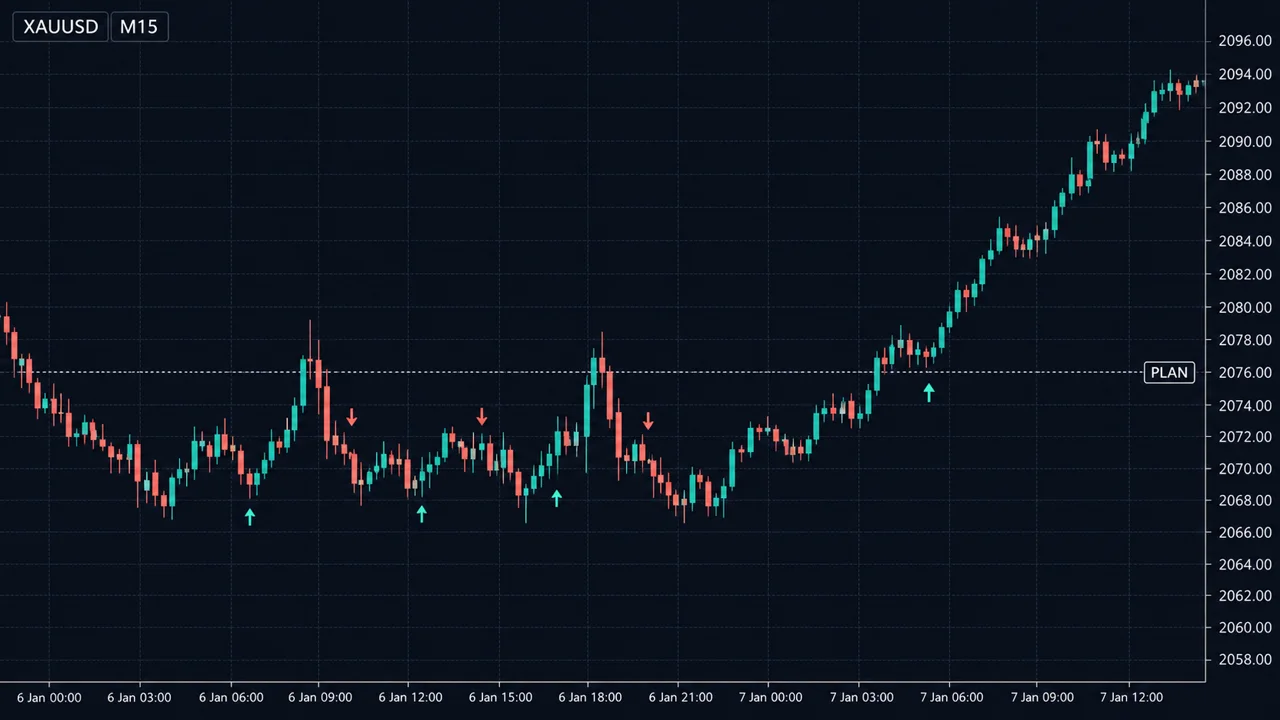
ดูภาพด้านล่าง ไม้เดียวกันในตัวอย่าง
ข้อผิดพลาดที่พบบ่อย
- คิดว่ารู้แล้วจะไม่โดน การรู้ชื่ออคติช่วยได้น้อย ถ้าไม่มีกฎที่บังคับใช้ อคติทำงานเร็วกว่าความคิดเสมอ
- โทษอคติแทนการแก้ระบบ บางครั้งที่ขาดทุนก็เพราะระบบไม่มีความได้เปรียบจริง ต้องดูข้อมูลจากบันทึกด้วย
- ใช้กลุ่มหรือโซเชียลยืนยันไม้ ถ้าทุกคนในกลุ่มคิดเหมือนกัน ความเห็นตรงกันไม่ได้แปลว่าถูก
- เปลี่ยนระบบทุกสัปดาห์ เป็นผลของ Recency Bias ที่ทำให้ไม่มีระบบไหนได้พิสูจน์ตัวเองจริง
ใช้บนมือถือ
ทำเช็กลิสต์อคติสั้น ๆ ไว้ในโน้ตของมือถือ แล้วเปิดดูก่อนทุกไม้ เช่น
- ฉันเห็นเหตุผลที่ไม้นี้อาจผิดแล้วหรือยัง
- ล็อตนี้มาจากสูตร หรือจากความรู้สึก
- ถ้าไม่มีไม้อยู่ ฉันจะเข้าที่ราคานี้ไหม
สามคำถามนี้ใช้เวลาไม่ถึงหนึ่งนาที แต่ครอบคลุมอคติหลักเกือบทั้งหมด
สรุป
- อคติเป็นทางลัดของสมองที่ทำให้ตัดสินใจผิดในสภาพที่ไม่แน่นอน
- ตัวที่เจอบ่อย: ยืนยันความเชื่อ เกลียดการขาดทุน ยึดติดราคา นักพนัน ผลล่าสุด มั่นใจเกิน ต้นทุนจม
- การรู้ชื่อไม่พอ ต้องมีกฎที่วางไว้ล่วงหน้า
- คำถามหลัก: "ถ้ายังไม่มีไม้ จะเข้าที่ราคานี้ไหม"
A cognitive bias is a mental shortcut the brain uses to decide quickly. In everyday life these shortcuts help a lot. In a market where outcomes are uncertain and money is on the line, they often lead us the wrong way. The good news: once you know their names and shapes, you start catching them in action, and you can set rules against them in advance.
The biases traders meet most
1. Confirmation bias
Once you decide gold is going up, you notice only evidence that agrees and skip the signals that disagree — looking only at the bullish timeframe, or only reading groups that think like you.
Counter: before entering, write at least one reason the trade could be wrong, and define what price must do for you to admit it (that is your stop).
2. Loss aversion
Losing a sum hurts more than gaining the same sum feels good. So we hold losers to avoid "making the pain real," and grab small profits to lock in the good feeling.
Counter: set the stop when you open the trade and never widen it. Let the platform close it for you.
3. Anchoring
We fix on a number — our entry price, yesterday's high — and decide around it: "I'll close when it gets back to breakeven," even though the market has no idea where you got in.
Counter: ask, "If I had no position right now, would I open this trade at this price?" If not, there is no reason to keep holding.
4. Gambler's fallacy
Five losses in a row, so the next one "must" win. Six green candles in a row, so it "has" to drop. The result of previous trades does not make the next one more likely to win. See probabilistic thinking.
Counter: keep the lot exactly as your formula says. Never size up because you are "due."
5. Recency bias
Giving too much weight to the last few trades. Three wins and the method is brilliant; three losses and it is broken — so you keep switching methods.
Counter: judge a method on a large sample, say 50–100 trades or more, not on one week.
6. Overconfidence
After a winning streak we credit our skill too much, increase size and skip the checklist. See ego and confidence.
Counter: lot size comes from the risk formula only, never from how you feel.
7. Sunk cost
"I've held it three days; cutting now would waste all that." Time and money already spent should not drive the next decision.
Counter: decide from the chart as it is now. What has passed cannot be changed.
Suppose a $4,000 account. The trader buys EURUSD at 1.0850 with 0.20 lots and a stop at 1.0820, 30 pips away. At 0.20 lots, 1 pip = $2, so the risk is 30 × $2 = $60 (1.5%). Price approaches the stop. He thinks, "Let it get back to 1.0850 first," and deletes the stop (anchoring). The next day price is still falling and he thinks, "I've held it this long" (sunk cost). Eventually he gives in and closes at 1.0760. Actual loss: 1.0850 − 1.0760 = 90 pips × $2 = $180 (4.5%), three times the plan. Had he asked at 1.0820, "With no position, would I buy here?" and answered no, the loss would have been $60.
See the picture below: the same trade as in the example.
Common mistakes
- Thinking that knowing a bias protects you. Naming it helps a little; without an enforced rule, the bias acts faster than thought.
- Blaming biases instead of fixing the method. Sometimes you lose because the method has no real edge. Check the data in your journal too.
- Using a group or social media to confirm trades. If everyone in the group thinks alike, agreement does not mean correctness.
- Changing method every week — recency bias in action, and it means no method ever gets a fair test.
On a phone
Keep a short bias checklist in your phone notes and open it before every trade, for example:
- Have I seen a reason this trade could be wrong?
- Did this lot come from the formula or from a feeling?
- With no position, would I enter at this price?
Those three questions take under a minute and cover almost all the main biases.
Summary
- Biases are mental shortcuts that misfire under uncertainty.
- Common ones: confirmation, loss aversion, anchoring, gambler's fallacy, recency, overconfidence, sunk cost.
- Knowing the names is not enough; you need rules set in advance.
- The key question: "With no position, would I enter at this price?"