วิธีตั้งจุดทำกำไร (Take Profit)Take-Profit Methods
เปรียบเทียบวิธีตั้ง TP แบบต่าง ๆ ทั้งแบบ R คงที่ แนวรับแนวต้าน ATR และปิดบางส่วน พร้อมผลลัพธ์ที่คำนวณเป็นตัวเลขA comparison of take-profit methods, fixed R, structure, ATR and partial closes, with the outcomes worked out in numbers.
ในบทความนี้ · 8
In this article · 8
จุดทำกำไร (Take Profit หรือ TP) กำหนดว่ากำไรต่อไม้จะใหญ่แค่ไหน และส่งผลโดยตรงกับอัตราชนะ เป้าใกล้ถึงบ่อยแต่ได้น้อย เป้าไกลได้มากแต่ถึงน้อยครั้ง ไม่มีวิธีที่ดีที่สุดสำหรับทุกคน แต่มีวิธีที่เหมาะกับรูปแบบการเทรดแต่ละแบบ บทความนี้เปรียบเทียบวิธีหลัก ๆ และคำนวณผลให้เห็นชัด
ทำไมการตั้ง TP ถึงสำคัญ
TP เป็นครึ่งหนึ่งของ RR (ดู RR และอัตราชนะ) และเป็นตัวกำหนดค่าคาดหวังร่วมกับ SL ระบบที่หาจุดเข้าเก่งแต่ออกไม่ดี อาจกลายเป็นระบบที่ขาดทุนได้ สิ่งที่ควรมีคือกฎออกที่ชัดเจนก่อนเข้าไม้ เพื่อไม่ต้องตัดสินใจด้วยอารมณ์ระหว่างที่ราคาวิ่ง
วิธีตั้ง TP ที่นิยม
| วิธี | หลักการ | ข้อดี / ข้อเสีย |
|---|---|---|
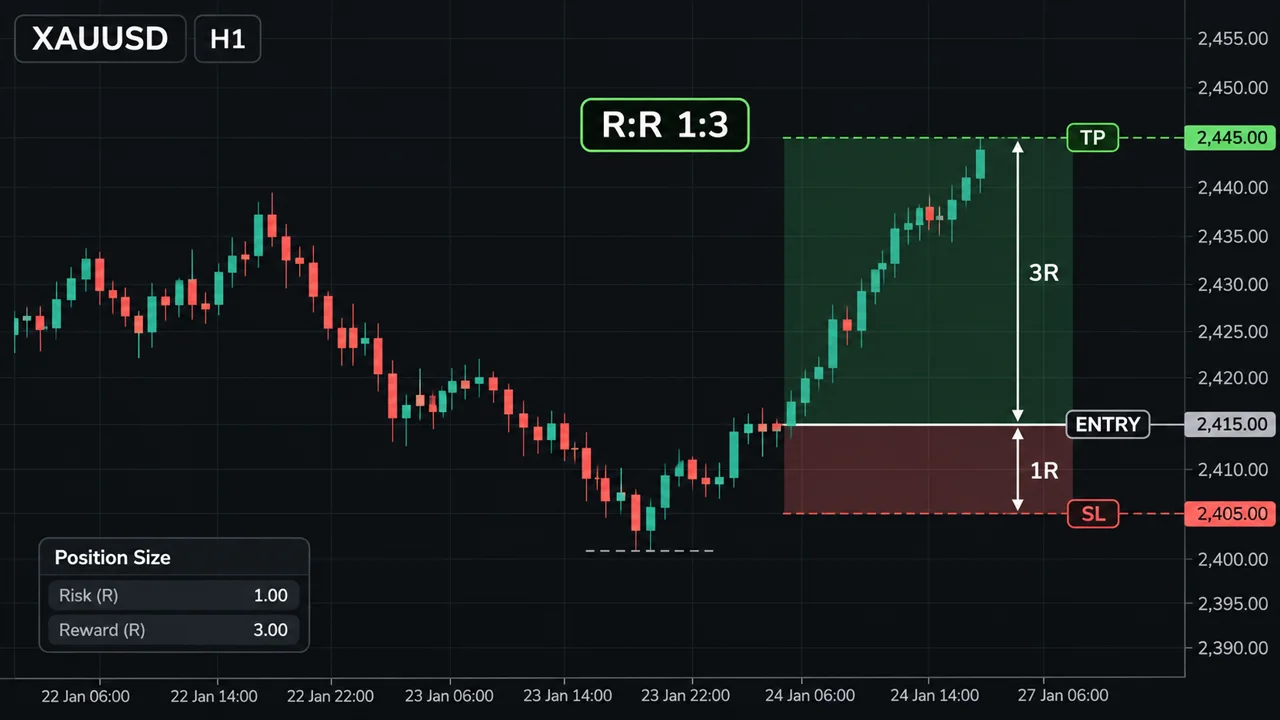
| R คงที่ | TP = ระยะ SL × ตัวคูณ เช่น 2R | ง่าย วัดผลง่าย / ไม่สนโครงสร้างราคา |
| โครงสร้างราคา | วางก่อนถึงแนวรับแนวต้านถัดไปเล็กน้อย | สอดคล้องกับกราฟ / RR ไม่คงที่ |
| ATR | TP = ATR × ตัวคูณ | ปรับตามความผันผวน / ไม่สนแนวราคา |
| ปิดบางส่วน | ปิดครึ่งที่เป้าแรก ที่เหลือปล่อยต่อ | ลดความกดดัน / ลดกำไรเมื่อราคาวิ่งไกล |
| เลื่อน SL ตาม | ไม่มี TP ตายตัว ใช้ SL ตามราคา | จับเทรนด์ยาวได้ / คืนกำไรบางส่วนเสมอ |
วิธีสุดท้ายอธิบายแยกในบทความ การเลื่อน SL ตามราคา
ตัวอย่าง TP แบบโครงสร้างราคา
เข้าซื้อ 1,950.00 · SL 1,945.00 (ระยะ $5.00 = 1R) แนวต้านถัดไปที่ 1,961.80 วาง TP ก่อนถึงเล็กน้อยที่ 1,961.30 ระยะ TP = 1,961.30 − 1,950.00 = $11.30 → RR = 11.30 ÷ 5.00 = 2.26R ที่ 0.04 ล็อต: เสี่ยง $5 × 4 = $20 · เป้า $11.30 × 4 = $45.20
การวางก่อนแนวต้านเล็กน้อยเพราะราคามักตอบสนองก่อนถึงเส้นพอดี และไม้ซื้อปิดที่ราคา Bid ส่วน TP ของไม้ขายจะโดนเมื่อ Ask ลงมาถึง ซึ่งต้องเผื่อสเปรดเช่นเดียวกับ SL
ตัวอย่างปิดบางส่วนเทียบกับปิดทั้งหมด
เงินที่เสี่ยง = $40 · เข้า 1.0850 SL 1.0830 (20 pips) ล็อต = $40 ÷ (20 × $10) = 0.20 ล็อต · TP เต็มที่ 2R = 1.0890 (40 pips) แบบ A ปิดทั้งหมดที่ 2R: 40 pips × $2 = +$80 = +2R แบบ B ปิด 0.10 ที่ 1R (1.0870) แล้วเลื่อน SL ที่เหลือมาที่จุดเข้า ส่วนแรก: 20 pips × $1 = +$20 ถ้าส่วนที่เหลือถึง 2R: 40 pips × $1 = +$40 → รวม +$60 = +1.5R ถ้าส่วนที่เหลือโดน SL ที่จุดเข้า: $0 → รวม +$20 = +0.5R ถ้าราคาไม่ถึง 1R แล้วโดน SL ทั้งสองแบบเสีย −$40 = −1R
การปิดบางส่วนไม่ได้ "ดีกว่า" หรือ "แย่กว่า" ในตัวเอง มันเปลี่ยนรูปร่างของผลลัพธ์ ไม้ที่ไปถึง 1R แล้วกลับตัวจะได้กำไรบ้างแทนที่จะเสมอตัวหรือขาดทุน แต่ไม้ที่วิ่งไปถึงเป้าจะได้น้อยลง ผลรวมขึ้นกับว่าในระบบของคุณ ราคาที่ถึง 1R แล้วไปต่อถึง 2R บ่อยแค่ไหน ซึ่งต้องวัดจากสถิติจริง (ดู การเพิ่ม/ลดขนาดไม้)
เลือกวิธีให้เหมาะกับรูปแบบการเทรด
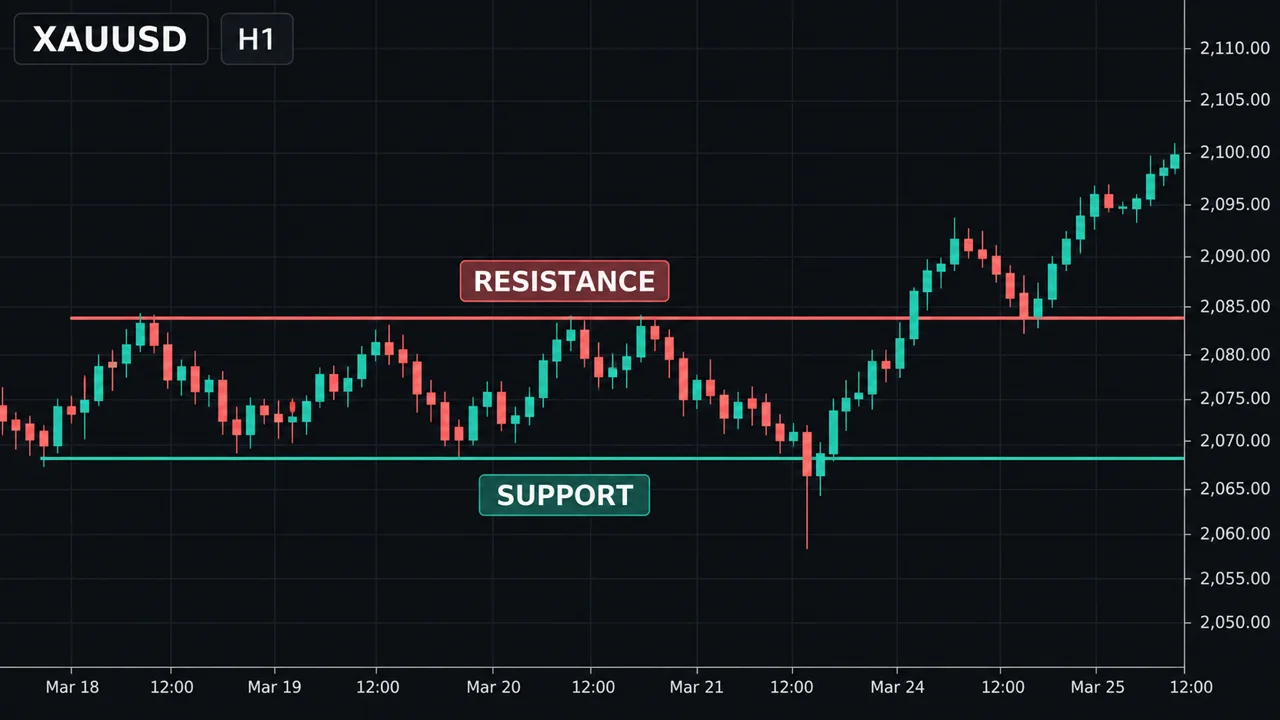
- เทรดในกรอบ (Range) เป้าที่ขอบกรอบฝั่งตรงข้ามมักสมเหตุสมผลกว่า R คงที่
- ตามเทรนด์ เป้าคงที่อาจตัดกำไรจากการวิ่งยาว การเลื่อน SL ตามหรือปิดบางส่วนช่วยได้
- ระบบอัตโนมัติหรือการทดสอบย้อนหลัง R คงที่หรือ ATR ทำให้กฎชัดเจนและทดสอบได้
- ช่วงเวลา เทรดระยะสั้นอาจมีกฎออกตามเวลา เช่น ปิดก่อนหมดช่วงตลาดที่เทรด
ไม่ว่าเลือกแบบไหน ให้ใช้แบบเดียวกันสม่ำเสมอพอที่จะวัดผลได้ สถิติจากการเปลี่ยนวิธีออกทุกไม้ไม่มีความหมาย
จุดอ่อน / ข้อผิดพลาดที่พบบ่อย
- ปิดกำไรเร็วเพราะกลัว แต่ถือขาดทุนนาน ทำให้กำไรเฉลี่ยเล็กกว่าขาดทุนเฉลี่ย ระบบที่ดีก็ติดลบได้
- ตั้งเป้าไกลเกินโครงสร้าง เช่น 5R ทั้งที่มีแนวต้านแรงอยู่ห่างแค่ 1.5R อัตราชนะจะต่ำมาก
- ย้าย TP ออกไปไกลขึ้นระหว่างทาง เพราะหวังมากขึ้น บ่อยครั้งจบที่ราคากลับมาโดน SL
- ไม่นับต้นทุน ไม้ที่ TP ใกล้มาก ๆ สเปรดกินกำไรส่วนใหญ่
- ประเมินการปิดบางส่วนด้วยความรู้สึก ต้องวัดจากข้อมูลว่าช่วยค่าคาดหวังหรือไม่
ใช้บนมือถือ
แอป MT4/MT5 มือถือรองรับการปิดบางส่วน: เข้าไปที่ออเดอร์ เลือกปิด แล้วแก้จำนวนล็อตก่อนกดยืนยัน ระวังว่าล็อตที่ปิดต้องไม่ต่ำกว่าขั้นต่ำ (เช่น 0.01) และส่วนที่เหลือก็ต้องไม่ต่ำกว่าขั้นต่ำด้วย ไม้ 0.01 ล็อตจึงปิดบางส่วนไม่ได้
สรุป
- TP กำหนดครึ่งหนึ่งของ RR และมีผลกับอัตราชนะโดยตรง
- วิธีหลัก: R คงที่ โครงสร้างราคา ATR ปิดบางส่วน และเลื่อน SL ตาม
- วาง TP ก่อนแนวราคาเล็กน้อย และเผื่อสเปรดสำหรับไม้ขาย
- ปิดบางส่วนเปลี่ยนรูปร่างผลลัพธ์ ไม่ได้ดีกว่าโดยอัตโนมัติ ต้องวัดจากสถิติ
- ใช้วิธีเดียวกันสม่ำเสมอเพื่อให้วัดผลได้
Your take profit decides how big a winning trade can be, and it directly affects your win rate. Close targets are hit often but pay little; distant targets pay more but are hit less often. There is no best method for everyone, but there are methods that suit each style of trading. This article compares the main ones and works out the outcomes.
Why the target matters
The target is half of your RR (see Risk:Reward and Win Rate) and, with the stop, decides expectancy. A system with good entries and poor exits can easily lose money. You want clear exit rules before you enter, so you are not deciding emotionally while price is moving.
Common methods
| Method | Idea | Pros / cons |
|---|---|---|
| Fixed R | Target = stop distance × multiple, e.g. 2R | Simple, easy to measure / ignores structure |
| Structure | Just before the next support or resistance | Fits the chart / RR varies |
| ATR | Target = ATR × multiple | Adapts to volatility / ignores levels |
| Partial close | Close half at a first target, let the rest run | Less pressure / less profit on long runs |
| Trailing stop | No fixed target, a stop that follows price | Catches long trends / always gives some back |
The last one has its own article: Trailing Stops.
Structure-based target example
Entry 1,950.00 · stop 1,945.00 (distance $5.00 = 1R). Next resistance at 1,961.80; place the target a little before it at 1,961.30. Target distance = 1,961.30 − 1,950.00 = $11.30 → RR = 11.30 ÷ 5.00 = 2.26R. At 0.04 lot: risk $5 × 4 = $20 · target $11.30 × 4 = $45.20.
Placing the target a little early helps because price often reacts before touching the exact line. Buys close at the Bid, while a sell's target is hit when the Ask comes down to it, so allow for the spread there, as with stops.
Partial close versus full close
Money at risk = $40 · entry 1.0850, stop 1.0830 (20 pips). Lot = $40 ÷ (20 × $10) = 0.20 · full target at 2R = 1.0890 (40 pips). A: close everything at 2R: 40 pips × $2 = +$80 = +2R. B: close 0.10 at 1R (1.0870), move the rest's stop to entry. First half: 20 pips × $1 = +$20. If the rest reaches 2R: 40 pips × $1 = +$40 → total +$60 = +1.5R. If the rest is stopped at entry: $0 → total +$20 = +0.5R. If price never reaches 1R and hits the stop, both lose −$40 = −1R.
A partial close is not better or worse in itself; it changes the shape of results. Trades that reach 1R and reverse now earn something instead of nothing or a loss, but trades that run to the target earn less. The net effect depends on how often, in your system, price that reaches 1R goes on to 2R, which you must measure from real statistics (see Scaling In and Out).
Matching the method to your style
- Range trading: the opposite edge of the range is usually a more sensible target than fixed R.
- Trend following: fixed targets can cut off long runs; trailing or partial closes help.
- Automated systems or backtests: fixed R or ATR keeps the rules clear and testable.
- Time: short-term traders may also exit on time, such as before their session ends.
Whatever you choose, use it consistently enough to measure. Statistics from changing the exit on every trade mean nothing.
Weaknesses and common mistakes
- Taking profits early out of fear but holding losers long. Average win shrinks below average loss and even a good system goes negative.
- Targets beyond the structure, like 5R when strong resistance sits 1.5R away. The win rate collapses.
- Moving the target further out mid-trade out of hope. It often ends with price coming back to the stop.
- Ignoring costs. With very close targets, the spread eats most of the profit.
- Judging partial closes by feel. Measure whether they help expectancy using data.
On a phone
MT4/MT5 mobile supports partial closes: open the position, choose close, and edit the volume before confirming. The closed part must be at least the minimum lot (say 0.01) and so must the remainder, which means a 0.01 lot position cannot be partly closed.
Summary
- The target sets half of your RR and directly affects win rate.
- Main methods: fixed R, structure, ATR, partial close and trailing stop.
- Place targets a little before levels, and allow for spread on sells.
- Partial closes change the shape of results; they are not automatically better. Measure them.
- Use one method consistently so you can measure it.